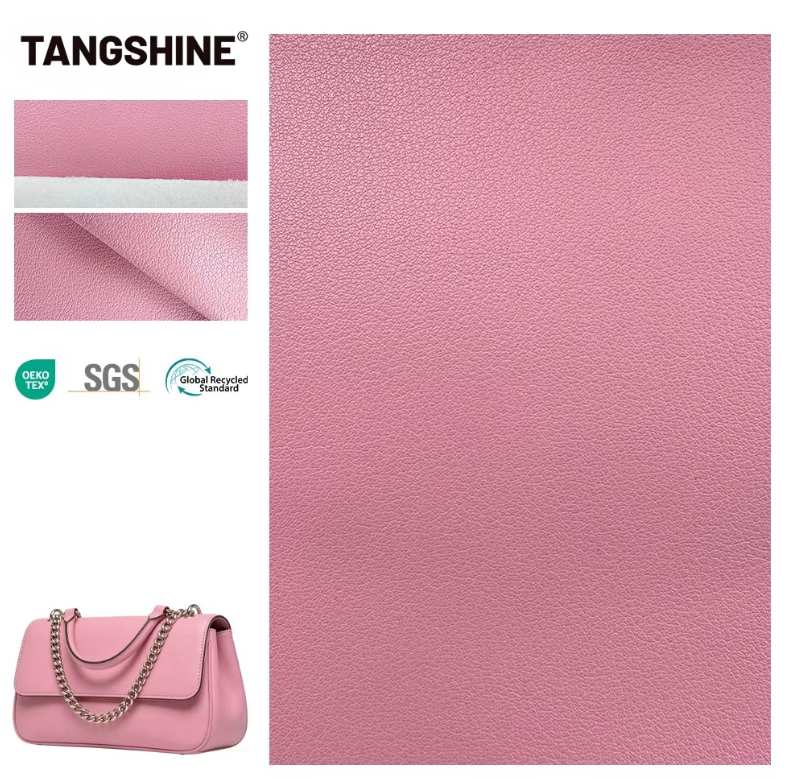
Of all the available alternatives for leather sourcing, choosing an integrated soft leather manufacturer is the best option. Having different suppliers for raw materials, production, and shipping usually leads to an inefficient supply chain process. A manufacturer that integrates all functions eliminates this problem. Industries that value speed and uniformity, such as fashion, furniture, and accessory making, greatly benefit from this approach. Below are the key supply chain advantages of partnering with an integrated soft leather manufacturer.
Uninterrupted Supply Chain Process
Almost all functions are carried out in the manufacturer’s own plant. Raw materials are sourced, leather is produced, quality control is performed, and the final product is packaged—all in the same place. For example, one integrated leather plant may cover 60,000 square meters, employ 500 workers, and produce 500–600 million meters annually. Because of the plant’s size, quality is maintained at every step of an order. The manufacturer eliminates the problem of coordinating multiple parties; everything moves smoothly to the next stage. Buying from this type of manufacturer greatly simplifies the process, allowing businesses to focus on their primary activities.
Faster and More Reliable Deliveries
Delivery speed and reliability are interconnected in demand-driven production. Late shipments affect production timelines and customer retention. Integrated manufacturers can meet delivery timelines because they do not depend on external partners. They often deliver on time with a 7-day schedule and a 24-hour agile response. Being end-to-end, they can fix production problems—such as a machine breakdown or material shortage—without waiting for a third party. Internal speed prevents gaps in production, meaning buyers receive deliveries as needed and avoid empty shelves or production line stoppages. Soft leather buyers pay a premium for this reliability.
Streamlined Operations for Affordable Quality
It is sometimes assumed that direct shipments from the factory result in poor quality goods. This is not the case. Integrated manufacturers optimize productivity by cutting out middlemen. With no agent fees or trader markups, the entire margin can be invested in production value, leading to better materials and more competitive pricing. Shipping remains cheap because one supplier handles the entire production process. The integrated operation also encourages bulk runs and facilitates waste control. Savings come from efficient operations, not from lowering ingredient quality. For example, an integrated site may offer durability, softness, a high level of customization, and factory-direct pricing as its specialties. Affordable, top-quality, factory-direct soft leather is not about cutting corners; it is about better value. Buyers end up paying less while receiving higher quality.
Uniform Workmanship from Start to Finish
Quality control becomes simpler when a single company handles the entire supply chain. With its own integrated facilities, a manufacturer can test raw materials and finished products. They are accountable if anything goes wrong in the supply chain. High-tech manufacturing and skilled workers ensure that finished products pass standard tests. This provides greater accuracy and reduces waste and product failures. For businesses that produce leather goods—whether bags, leather sofas, leather clothing, or other items—the texture, quality, and color of the finish must be consistent across all products. Customers become dissatisfied and look elsewhere when they notice variation. Direct manufacturing ensures that every component on the production line is properly matched.
Improved Communication and Fewer Errors
Focusing on one supplier is better than juggling multiple. Integrated manufacturers simplify everything—orders, samples, and issue resolution—with just one contact point. Emails are streamlined, confusion is reduced, and answers are immediate. Modifications, inquiries about custom finishes, and order adjustments become less complex. All of this is achieved by a single physical entity that is part of the same group. Seamless communication and coordination follow. Engaging the manufacturer simplifies custom projects. The manufacturer acts as a steadfast partner at every stage, from material selection and technical samples to large-scale production and on‑schedule order fulfillment. This close communication and multi‑project collaboration is nearly impossible with multiple suppliers. When sourcing soft leather, communication errors and other issues are eliminated, making the process as smooth as possible.
Built‑In Eco‑Friendly Practices
More people care about sustainability, including customers. Integrated manufacturers have an advantage over those with fragmented operations because they can implement eco‑friendly techniques throughout their entire supply chain. Benefits include sourcing sustainable raw materials that meet standards such as ZERO DMFA, Recycled, and PFAS‑Free. These certifications are important for brands targeting eco‑conscious shoppers. Manufacturers that bring everything into one center can better control where materials come from and how they are processed. Centralization also makes products easier to trace. This helps manufacturers achieve sustainability with less effort. Finally, sourcing soft leather from an integrated partner means less transportation, which benefits both the planet and the company’s bottom line.
Conclusion
Sourcing soft leather from an integrated manufacturer is simpler, cheaper, faster, more sustainable, and delivers better quality. The certainty of integrated manufacturing helps supply chain planners and sustainability leaders alike. Gone are the days of dealing with the uncertainty caused by multiple manufacturers. The future is manufacturing everything in one place.
