The Visual Language of Material Differentiation
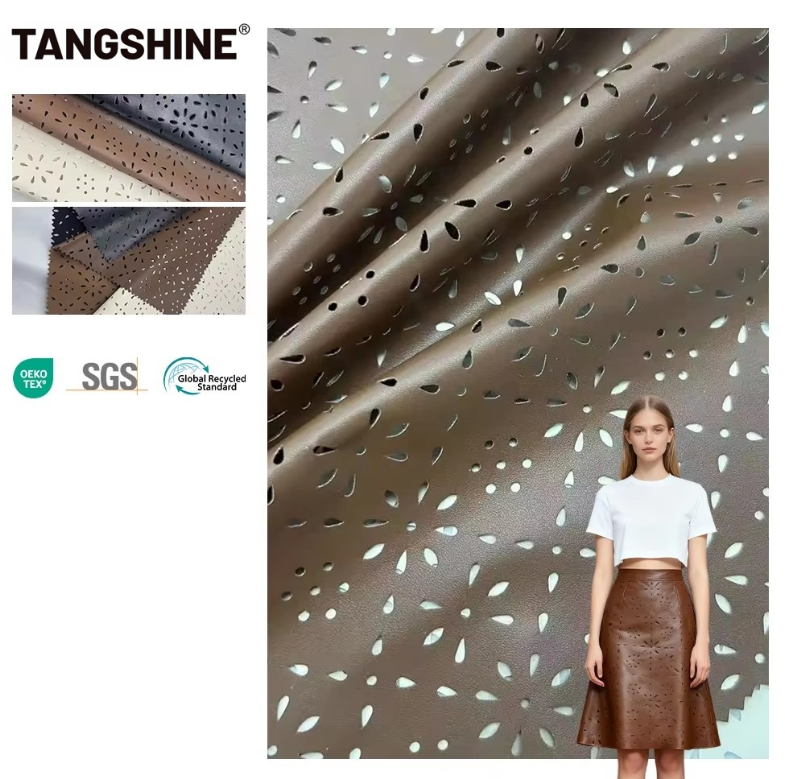
Walk through any trade show or browse a wholesale catalog, and a pattern emerges quickly. Rows of products in black, brown, and tan leather blur together, each one indistinguishable from the next. The brands that command attention and secure larger orders are rarely the ones offering another standard solid color. They are the ones presenting a material that tells a story before a single word of sales copy is read. Printed leather occupies this exact strategic position. It transforms a commodity material into a visual signature. A reptilian emboss, a geometric repeat pattern, a faded floral motif, or a metallic foil accent applied to a leather surface immediately communicates design intent. The material itself becomes the differentiator, speaking directly to a wholesale buyer who has seen every shade of brown and black in existence and who desperately needs something that will stand out in a retail environment. This is not about embellishment for its own sake. It is about creating an instant, non-verbal value proposition. A furniture buyer selecting upholstery for a new hotel chain, a fashion accessories brand developing a seasonal handbag collection, or an automotive restorer sourcing interior panels all share the same reaction when they encounter a printed leather that aligns with their vision. The search stops. The material has already done half the selling. For the brand owner supplying that leather, the dedicated printed line becomes not just a product category but the reason a wholesale client chooses them over a dozen generic alternatives.
Consistency Across Production Batches and Time
Wholesale buyers operate on a logic of repeatability. A furniture manufacturer committing to a printed leather for a collection that will be marketed for two years needs absolute confidence that the hide ordered this month will match the hide ordered six months from now. A fashion brand producing a seasonal run of bags across multiple factories requires consistency not just between hides within a single batch but across entirely separate production lots manufactured at different times. This is where the concept of a dedicated printed leather line reveals its true commercial value. A supplier that has invested in a dedicated production line for printed leather is not printing on whatever base leather happens to be available. The tanning process, the base color application, the surface preparation, and the printing technique are all integrated into a single, controlled workflow. The same base leather, tanned to the same specification, prepared to the same surface tension, receives the same print from the same cylinder or digital file, cured under the same temperature and dwell time. The result is pattern repeat accuracy measured in fractions of a millimeter and color matching that holds within tolerance across production batches. This is not a trivial manufacturing achievement. Leather is a natural material with inherent variability in grain structure, porosity, and fiber density. Managing that variability so that a printed pattern lands identically on every hide requires process control that only a specialized line can deliver. For the wholesale client, this consistency eliminates the dreaded phone call where a production manager reports that the latest batch does not match the approved sample and the entire production schedule is now at risk.
Customization as a Competitive Moat for Wholesale Clients
The wholesale market has a well-known dynamic. If a product sells well, competitors will attempt to replicate it. The speed of that replication depends on how generic the components are. A bag made from a standard black cowhide leather can be sourced by anyone with a supplier directory. A bag made from a custom-printed leather with a proprietary pattern, developed in collaboration between the brand and the tannery, is exponentially harder to copy. This is the competitive moat that a dedicated printed leather line creates. The customization possibilities extend across multiple dimensions. The pattern itself can be an original design, created by the brand's in-house team or developed jointly with the supplier's design studio. The scale of the pattern can be adjusted to suit different product sizes, a smaller repeat for wallets and accessories, a larger repeat for furniture and wall panels. The color palette can be tuned to match an existing brand identity, ensuring that the leather speaks the same visual language as the packaging, the store design, and the marketing materials. The finish can be specified as matte, gloss, or a tactile combination that adds a dimensional quality beyond the visual print. This depth of customization transforms the supplier relationship from a transactional purchase of stock material into a collaborative development partnership. The wholesale client is no longer buying off the shelf. They are co-creating a material asset that belongs exclusively to their brand. This exclusivity commands higher margins at retail, builds stronger brand recognition, and makes the client relationship significantly stickier for the supplier who enabled it.
Technical Durability That Withstands Commercial Use
A printed leather that looks stunning on a showroom sample but cracks, fades, or delaminates after six months of real-world use is not a premium product. It is a liability. The technical performance of printed leather is determined by the chemistry of the printing system and its compatibility with the leather substrate. Transfer printing, where a pre-printed film is heat-pressed onto a prepared leather surface, requires a finish layer that bonds securely without compromising the flexibility of the leather beneath. Digital printing directly onto leather demands a pre-treatment that opens the grain to accept ink without bleeding, followed by a protective topcoat that seals the print against abrasion. The testing protocols that matter for commercial applications include rub fastness, measured by a crockmeter test that simulates thousands of repeated contacts, and lightfastness, measured by accelerated weathering under xenon arc lamps that replicate years of sun exposure. A printed leather destined for automotive interiors faces a particularly demanding set of requirements. It must withstand temperature extremes from freezing winters to scorching summers without the print degrading or the finish becoming tacky. A printed leather for restaurant seating must resist staining from food oils and cleaning chemicals. A printed leather for handbags must survive the friction of being carried against clothing. A dedicated printed leather supplier understands these application-specific demands and builds the production specification accordingly. The base leather selection, the print chemistry, and the topcoat formulation are all tuned to the intended end use. This technical depth is invisible to the end consumer but absolutely fundamental to the wholesale buyer who stakes their brand reputation on the material's performance.
Inventory Efficiency and Supply Chain Predictability
Beyond the visual and technical attributes, a dedicated printed leather line offers a set of operational advantages that directly impact a wholesale client's bottom line. Managing inventory across dozens of leather colors and patterns sourced from multiple small suppliers creates complexity, increases carrying costs, and multiplies the points of potential supply disruption. Consolidating printed leather sourcing with a supplier that operates a dedicated line simplifies this equation considerably. The supplier maintains controlled stocks of the base leather and the printing consumables, allowing for faster response to reorders. Lead times become more predictable because the production process is not competing with unrelated products for machine time. The minimum order quantities, while still reflecting the economics of custom production, are often more flexible than those of a generalist tannery that must completely reset its finishing line for a specialty run. This supply chain predictability is especially valuable for brands that sell through a wholesale model themselves. Their own retail buyers demand on-time delivery and consistent quality, and any disruption at the material sourcing stage cascades through the entire value chain. A brand that can confidently quote delivery dates to its own customers because it trusts its leather supplier's production schedule gains a competitive advantage that is not visible to the end consumer but is deeply felt in the operational rhythms of the business.
The Manufacturing Partnership That Elevates Your Offering
The decision to develop a dedicated printed leather line is ultimately a decision to invest in a manufacturing partnership rather than a transactional supplier relationship. The difference manifests at every stage of the product lifecycle. During development, a partner with deep experience in leather printing can advise on which patterns will translate effectively to leather's natural texture, which color combinations will remain vibrant after the topcoat is applied, and which base leathers will provide the best foundation for the intended application. During production, that same partner maintains the process controls that ensure batch-to-batch consistency and the quality inspections that catch defects before the hides are cut and sewn into finished products. Over time, the partnership deepens as the supplier becomes familiar with the brand's aesthetic preferences, quality standards, and commercial rhythms. Tangshine operates with this partnership approach, bringing together tanneries, printing technology, and quality management systems into a cohesive offering for brands seeking printed leather solutions. The value delivered is not limited to the physical material. It includes the design collaboration that creates original patterns, the technical rigor that ensures those patterns perform under real-world conditions, and the supply chain reliability that allows the brand to plan its own production with confidence. In a wholesale market where material sourcing is often treated as a cost to be minimized, the brand that views its printed leather supplier as a strategic partner discovers that the material itself becomes a driver of demand, a builder of brand identity, and a source of competitive advantage that is not easily copied.
Table of Contents
- The Visual Language of Material Differentiation
- Consistency Across Production Batches and Time
- Customization as a Competitive Moat for Wholesale Clients
- Technical Durability That Withstands Commercial Use
- Inventory Efficiency and Supply Chain Predictability
- The Manufacturing Partnership That Elevates Your Offering
