Translating Touch into a Technical Specification
The challenge of developing a signature hand-feel begins with a communication problem. Touch is a deeply subjective sense. Words like soft, smooth, buttery, and plush mean slightly different things to different people, and what feels luxurious to one designer may feel flimsy to another. Walking into a mill and asking for something that feels premium is about as useful as walking into a kitchen and asking for something that tastes good. The mill needs a language, and building that language is the first and most important step in the collaboration. The most effective way to bridge this gap is through physical reference samples. A brand developer should arrive at the mill with a small library of swatches, not just of PU leather but of any material that captures the desired tactile quality. A piece of suede that has the perfect nap, a silicone phone case that demonstrates the ideal soft-touch grip, a high-end automotive dashboard skin that shows the right level of matte finish and compression recovery. These references do not need to be polyurethane. They need to communicate a sensation. Alongside the desired samples, it is equally valuable to bring examples of what does not work. A leather that feels too plastic, too rubbery, too slippery, or too stiff helps the mill's technical team understand the boundaries of the target. The conversation then shifts from abstract adjectives to concrete comparisons. The target hand-feel becomes not just soft but softer than sample A, with more surface slip than sample B, and a drape similar to sample C. This triangulation method gives the mill's chemists and coating engineers a sensory target they can work toward, translating the subjective into the kind of quantifiable parameters that guide formulation adjustments.
The Backing Fabric and the Foundation of Hand-Feel
The tactile personality of a polyurethane leather is built from the bottom up, and the bottom is the backing fabric. This layer is often overlooked because it is hidden from view in the finished product, but it contributes fundamentally to how the material drapes, stretches, recovers, and feels when gathered or folded. A brushed polyester backing creates a soft, fuzzy underside that gives the finished PU leather a warm, textile-like hand. This construction works particularly well for apparel and accessories that will be worn against the skin or handled frequently. A knitted backing introduces a degree of mechanical stretch and recovery that feels forgiving and comfortable, making it a common choice for footwear uppers and upholstery that needs to conform to curved surfaces without wrinkling. A woven backing provides structural stability and a firmer hand, suitable for bags, belts, and applications where the material must hold a precise shape under load. The weight of the backing fabric also matters. A heavier base adds body and a sense of substance. A lighter base increases fluidity and reduces the perception of artificial thickness. The bonding between the backing and the polyurethane coating is equally critical. A weak bond creates a hollow, papery feel and a tendency for the coating to delaminate at stress points. A well-engineered bond integrates the two layers so that the finished material feels like a single, coherent substance rather than a plastic film glued to a cloth. The mill's technical team adjusts this bond through the chemistry of the tie coat and the process controls on the coating line, and a brand developer who understands this relationship can have a more productive conversation about what is achievable.
Coating Chemistry and the Surface Tactile Signature
Once the backing is selected, the chemistry of the polyurethane coating becomes the primary driver of surface hand-feel. The formulation of the PU resin system is not a single recipe but a balance of competing properties. A harder resin provides scratch resistance and a crisp, dry touch but can feel plasticky and unyielding. A softer resin, achieved through the incorporation of plasticizers or through the selection of more flexible polyol components, delivers a supple, almost rubbery hand but may sacrifice surface durability and become tacky over time if not properly stabilized. The matting agents dispersed within the resin control the gloss level and contribute significantly to the tactile impression. A high-gloss surface tends to feel slick and cold. A deep matte surface feels warmer and more organic, closer to the experience of touching natural leather. The particle size and distribution of the matting agent affect not just the visual sheen but also the microscopic surface roughness that the fingertips detect as texture. Slip additives, typically silicone-based or wax-based compounds that migrate to the surface of the cured coating, control how easily a finger glides across the material. Too much slip and the material feels synthetic and cheap. Too little and it feels grabby and unpleasant. The art of formulation is in finding the balance point where the material feels smooth but not slick, soft but not sticky, substantial but not stiff. This is where the mill's formulation expertise becomes indispensable. A brand developer who communicates their priorities clearly, perhaps valuing a warm, matte touch over maximum scratch resistance for a handbag lining, or prioritizing a cool, clean slip for an electronics accessory, gives the chemist the guidance needed to push the formulation in the right direction.
Embossing, Finishing, and the Final Tactile Dimension
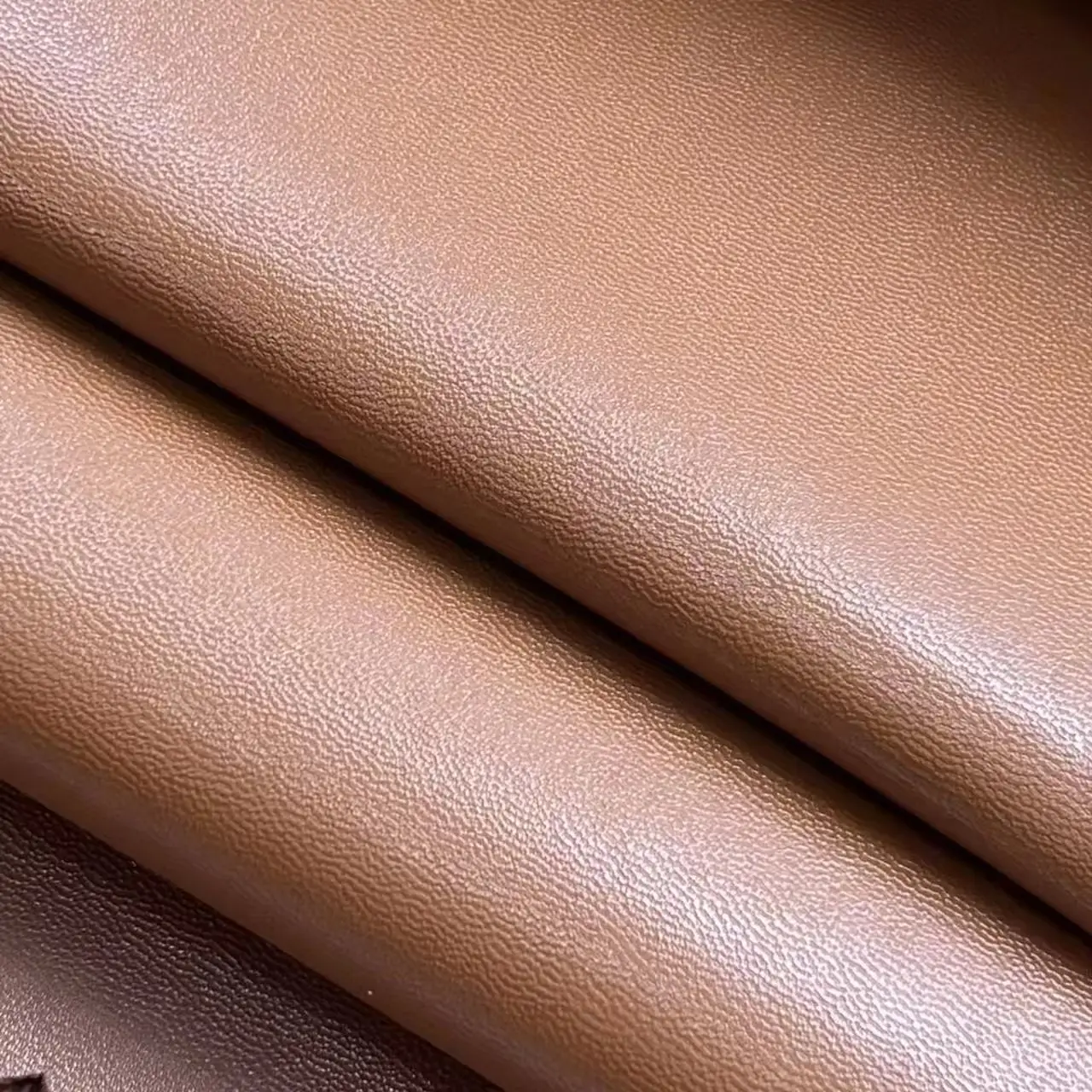
The surface texture created through embossing and post-treatment finishing adds the final layer of tactile complexity. Embossing is not purely a visual process. The pattern pressed into the coating surface creates a three-dimensional topography that the fingertips read as texture. A fine grain pattern produces a subtle, almost imperceptible texture that feels smooth at a glance but reveals a gentle resistance under close examination. A deep, pronounced grain creates a more aggressive tactile experience that can mimic the natural irregularities of animal leather. The temperature and pressure of the embossing rollers affect how permanently the pattern is set into the surface and whether the texture retains its definition after stretching and flexing. Beyond embossing, the finishing treatments applied after the coating is cured can transform the hand-feel entirely. A topical finishing agent can add a waxy, pull-up effect where the material lightens when stretched, mimicking the behavior of oiled leather. A micro-suede finish creates a velvety nap that feels warm and absorbent, ideal for applications where a soft, cozy touch is desired. A ceramic or nano-coating can introduce an unexpected coolness and a dry slip that signals cleanliness and high performance, qualities particularly valued in automotive and healthcare settings. The sequencing of these finishing steps matters. A finish applied too heavily can mask the underlying embossed texture. Applied too lightly, it wears away unevenly over the product's service life. The mill's finishing technicians understand these interactions, and the brand developer who engages with them during the sampling process, rather than simply approving or rejecting finished swatches remotely, learns how subtle adjustments in the finishing line create significant shifts in the final tactile identity.
The Sample Development Cycle and Iterative Refinement
Developing a signature hand-feel is not a one-round process. It is a structured conversation conducted through physical samples, and understanding how to participate in that conversation accelerates the journey from concept to approval. The first round of sampling should be treated as an exploration, not a final answer. The mill, working from the reference swatches and the technical discussion, produces a set of perhaps three to five variations that bracket the target. One sample may nail the surface softness but feel too thin overall. Another may have the right body but a surface that feels slightly tacky. A third may be close but exhibit too much surface shine. The brand developer's task at this stage is to provide specific, comparative feedback that narrows the target rather than broadens it. Feedback such as it needs to be softer does not help. Feedback such as the surface feel of sample two combined with the drape of sample four gives the mill a concrete direction for the next iteration. The second round incorporates these adjustments and should arrive significantly closer to the target. By the third round, the mill and the brand are typically fine-tuning subtle parameters: a slight increase in slip, a fractional reduction in grain depth, a small adjustment in the matte finish ratio. Throughout this process, the brand developer should keep a complete set of every round of samples, labeled by date and version. This archive serves multiple purposes. It documents the development journey for internal stakeholders. It provides a reference if a batch produced later needs to be compared against the approved standard. And it captures the incremental decisions that led to the final hand-feel, knowledge that proves invaluable when developing the next product in the line or when onboarding a new team member who needs to understand the brand's tactile DNA.
The Long-Term Value of a Proprietary Tactile Identity
The investment in developing a signature hand-feel with a mill pays returns that extend far beyond the single product that initiated the project. A distinctive tactile identity becomes a brand asset as recognizable as a logo or a color palette. A consumer who picks up a wallet, a handbag, or a pair of shoes and immediately recognizes the feel of the brand has formed a sensory connection that visual branding alone cannot create. This tactile recognition builds trust and signals quality in a marketplace saturated with products that look similar in photographs but feel entirely different in the hand. For wholesale buyers, a proprietary hand-feel is a powerful differentiator. A furniture buyer sourcing upholstery for a hotel chain or a footwear buyer selecting materials for a seasonal collection encounters countless suppliers offering PU leather that photographs well. The buyer who can hand a swatch to their team and say this is how our product feels has a material story that competitors cannot easily replicate. This exclusivity supports stronger pricing, repeat orders, and long-term account relationships. Tangshine understands this development process intimately, working with brand partners through the iterative sampling cycle to translate a tactile vision into a production-ready PU leather with a consistent, signature hand-feel. The combination of formulation expertise, process control on the coating and embossing lines, and a collaborative approach to sample development ensures that the hand-feel defined in the lab is the hand-feel that arrives in every production shipment. For the brand owner, this reliability transforms a custom material from a development project into a sustainable competitive advantage, a sensory signature that customers learn to seek out and that competitors find genuinely difficult to duplicate.
Table of Contents
- Translating Touch into a Technical Specification
- The Backing Fabric and the Foundation of Hand-Feel
- Coating Chemistry and the Surface Tactile Signature
- Embossing, Finishing, and the Final Tactile Dimension
- The Sample Development Cycle and Iterative Refinement
- The Long-Term Value of a Proprietary Tactile Identity
