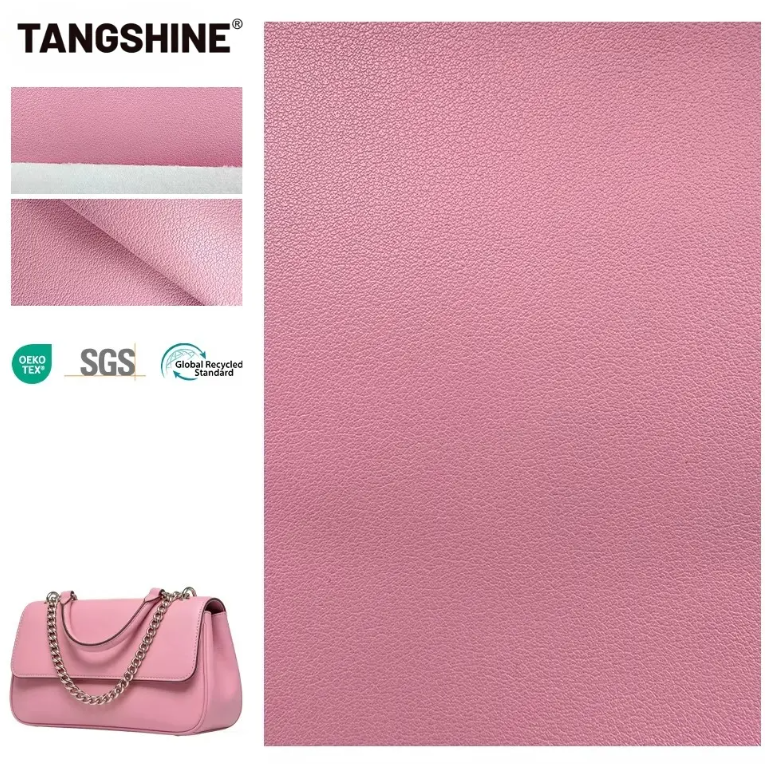
How PU Clothing Material Consistency Directly Shapes Brand Trust
Batch-to-batch uniformity in polyurethane coating thickness: impact on handfeel, drape, and visual consistency
PU clothing production relies on a controlled process where a base fabric is coated with polyurethane. Even micron-level variations in coating thickness can significantly alter tactile and visual performance—shifting handfeel from soft and supple to stiff and plastic-like, compromising drape, and causing inconsistencies in color depth or sheen. For wholesale buyers placing repeat orders, such deviations break the sensory contract: they expect identical performance across batches. When that expectation fails, perceived luxury erodes—and so does trust. Industry data from the Quality Textile Institute (2024) links 23% of customer attrition in the PU clothing segment directly to handfeel variation. Tight tolerance control across production runs ensures every batch meets the same rigorous standard, transforming consistency into a tangible signal of brand reliability.
Standardized quality verification: Martindale abrasion, tensile strength, and peel adhesion testing for PU clothing
Leading manufacturers anchor consistency in standardized, quantifiable testing—not subjective inspection. Martindale abrasion testing simulates real-world wear to verify surface durability; tensile strength testing confirms resistance to tearing under stress; and peel adhesion testing measures bond integrity between the PU layer and substrate. A failure in peel adhesion, for example, leads to delamination—a visible, costly defect that triggers returns and damages brand credibility. These tests are not procedural formalities—they’re the operational backbone of wholesale trust. By certifying each batch against objective thresholds, suppliers eliminate guesswork for retailers and de-risk procurement. As noted in Material Science Review (2024), even a 5% drop in tensile strength correlates with a 30% rise in field failure rates. This evidence-based rigor protects margins, safeguards reputation, and builds confidence at scale.
PU Clothing Fabric Composition and Perceived Quality Drivers
Polyurethane film thickness, substrate weave density, and finishing chemistry — the triad defining luxury perception in PU clothing
The luxury perception of PU clothing emerges from three interdependent variables—each calibrated to deliver cohesive sensory and functional performance.
Polyurethane film thickness is the primary tactile driver. Too thin, and the material feels flimsy, prone to cracking; too thick, and it sacrifices drape for rigidity. The optimal gauge delivers a supple, leather-like handfeel—immediately signaling premium quality upon touch.
Substrate weave density provides structural integrity. A high-density base creates a smooth, uniform canvas for the PU coating, preventing pitting or uneven finish. It also governs how the garment hangs and moves: dense weaves support clean silhouettes and resist deformation under stress, while looser weaves invite wrinkling and a “cheap” appearance—even if the coating itself is flawless.
Finishing chemistry refines both aesthetics and resilience. Advanced treatments enhance softness, hydrolysis resistance, and colorfastness—while also enabling signature surface effects: a subtle sheen, dry-touch finish, or sophisticated matte tone. Together, these elements form a synergistic system: precision-coated, structurally sound, and thoughtfully finished. Consumers may not articulate why a PU garment feels luxurious—but they recognize it instantly. That subconscious association is built not by marketing, but by material science executed with discipline.
Consistent PU Clothing Quality Reduces Returns and Strengthens Wholesale Loyalty
In the competitive B2B apparel market, consistent quality isn’t just desirable—it’s the primary lever for reducing returns and cultivating long-term wholesale partnerships. Variability doesn’t just inconvenience buyers; it undermines their ability to forecast performance, manage inventory, and uphold their own brand promises.
Data-backed insight: 32% higher return rates linked to inconsistent stretch recovery across PU garment batches (2023 Apparel Quality Index)
The 2023 Apparel Quality Index reveals a stark reality: wholesale buyers experience a 32% higher return rate when PU garment batches show erratic stretch recovery. This inconsistency—often tied to subtle shifts in PU elasticity or curing parameters—compromises fit and comfort after minimal wear. For distributors, those returns mean added logistics costs, strained relationships, and reputational risk with end retailers. In contrast, suppliers who enforce batch-level stretch recovery testing see measurable reductions in defect-related returns. Predictable performance reassures retail partners that every unit will meet consumer expectations—reducing the need for redundant inspections and rework. Over time, this reliability compounds: transactional buyers evolve into strategic partners, drawn not by price alone, but by the certainty that consistency delivers.
Cost Optimization vs. Long-Term Reputation: The PU Clothing Quality Trade-Off
Skimping on material consistency may offer short-term margin gains—but it rarely sustains them. The 2023 Apparel Quality Index shows that inconsistent stretch recovery alone drives a 32% spike in returns, inflating reverse logistics and eroding buyer confidence. Initial savings from lower-grade coatings or thinner substrates are quickly erased by lost repeat orders, diminished shelf appeal, and reputational damage that takes years to repair.
Investing in disciplined quality assurance—such as verifying coating thickness uniformity, peel adhesion, and stretch recovery—ensures every lot delivers on the same tactile, visual, and functional promise. That predictability reduces friction across the supply chain and transforms reliability into a competitive differentiator. Ultimately, consistent PU clothing quality functions as a silent brand ambassador: it reinforces premium positioning, supports pricing power, and fosters loyalty rooted in trust—not just convenience. Choosing consistency over cost isn’t an expense—it’s the most reliable investment in long-term brand equity.
