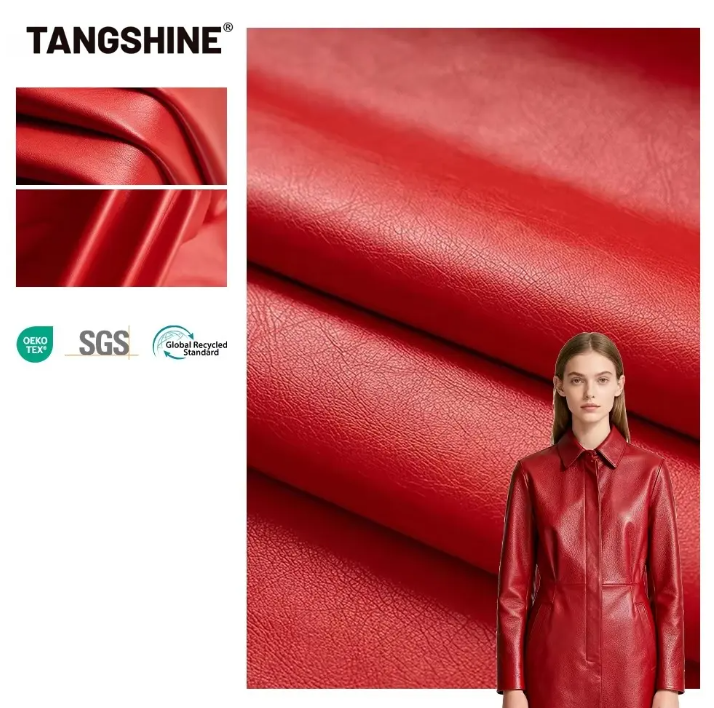
Understanding Soft Leather and Its True Purpose in Garments
Soft leather for garments is more than just a pleasant hand feel. It must drape naturally over the body, move with the wearer without pulling, and breathe enough to be comfortable across seasons. This kind of leather usually comes from sheepskin, lambskin, or selected calf hides that have a fine, tight grain structure and a natural suppleness. The true purpose of soft garment leather is to offer a second skin experience, shaping itself to the wearer’s silhouette while resisting crease cracking. When a leather supplier gets this balance wrong, you end up with a jacket that feels buttery in the store but sags and loses shape after two months of wear. Achieving the right softness without sacrificing structural integrity is the fundamental challenge, and it separates genuine quality from a fleeting tactile illusion.
The Grain, Tanning, and Dyeing Triangle That Shapes Quality
The character of soft garment leather is decided long before it reaches the cutting table. Full grain and top grain leathers retain the original surface, which allows the natural fiber network to stay strong while remaining flexible. The tanning process further defines the personality. Chrome tanning produces leather that is uniformly soft, lightfast, and can handle fine dye penetration, which is why it dominates the garment industry. Vegetable tanning, while more rigid initially, can be tumbled and softened to give a unique mellow hand that ages beautifully. The dyeing step is equally critical. Through dyed leather, where the color saturates the entire thickness, prevents the white core effect that appears at seams and scratches. Experts from Leather Naturally point out that premium garment leather is often aniline dyed or semi aniline finished, letting the natural grain show while keeping the surface breathable. When grain, tanning agent, and dyeing method align, the result is a leather that feels alive under your fingers and continues to improve with use.
A Tactile Test: What I Learned From Two Leather Jackets
I once owned two leather jackets that taught me more than any guidebook. The first was a budget friendly lambskin bomber that felt extraordinarily soft right off the hanger. After a single season, the leather had stretched unevenly around the elbows, the color had rubbed off the collar, and the seams showed tiny white lines where the dye had not fully penetrated. The second jacket, a cafe racer style in a more structured but still soft sheep nappa, cost a fair bit more. Years later, it still holds its shape, the grain has developed a subtle sheen, and the stitching points show no sign of ripping. The difference came down to more than thickness. The better jacket used a top grain hide with uniform density, a chrome tan that had been properly retanned for flexibility, and a through dye that stayed true even on the underside. Handling that jacket every day taught me that true quality soft leather resists deformation quietly, without announcing itself through excessive slouchiness.
Tensile Strength and Tear Resistance: The Hidden Engineering of Softness
A leather that is purely soft can be dangerously weak. That is why high-quality garment leathers are engineered to meet specific physical benchmarks. Tensile strength measures how much pulling force the leather can withstand before breaking, and tear strength indicates its resistance to ripping once a small cut appears. For sheep and lamb leathers used in clothing, a tensile strength above 8 to 10 Newtons per square millimeter is often considered reliable, while tear strength values referenced against ASTM D2212 or similar standards help predict how well a jacket will survive sharp objects or stress at the armhole. Without this hidden engineering, a soft leather can tear like paper at a stressed seam. The best tanneries treat softness and strength as two sides of the same coin, adjusting retanning agents and fatliquors to coat individual fiber bundles so they slide past each other smoothly while still holding together under load.
Why Finish Consistency and Color Fastness Matter Deeply
There is a quiet tragedy in garment leather: a beautiful jacket that stains its wearer’s shirt or fades unevenly in sunlight. High-quality soft leather demands consistent finishing. The topcoat, whether matte or semi gloss, must be uniformly applied to avoid blotchy wear. Color fastness to rubbing and light, often tested through methods like ISO 105 B02, ensures the jacket does not turn an unfortunate shade of orange after a summer of outdoor use. Third-party labs such as SGS regularly verify these metrics for brands that care about customer trust. When a garment leather is described as having excellent dry and wet rub fastness, it means you can wear it with a white silk blouse without fear. This level of transparency in performance data is a hallmark of suppliers who treat leather not as a commodity, but as an engineered material for fashion.
Crafting Softness at Scale: The Manufacturing and Supply Chain Edge
Delivering the characteristics described above, batch after batch, requires an integrated approach that starts at the raw hide level. Consistent selection of premium sheepskins and calfskins, tightly controlled tanning drum cycles, and precision buffing and coating lines are the backstage work that keeps garment leather performing predictably. This is where deep manufacturing expertise directly influences brand success. Tangshine has built its reputation by controlling this entire chain, from hide sourcing to final finishing and inspection. Their ability to replicate a specific softness and color standard across thousands of square feet means apparel brands receive leather that cuts, sews, and wears the same way season after season. For clothing labels that stake their name on fit and feel, partnering with a manufacturer that treats softness as a measurable, repeatable science rather than a lucky outcome is a genuine competitive advantage.
Table of Contents
- Understanding Soft Leather and Its True Purpose in Garments
- The Grain, Tanning, and Dyeing Triangle That Shapes Quality
- A Tactile Test: What I Learned From Two Leather Jackets
- Tensile Strength and Tear Resistance: The Hidden Engineering of Softness
- Why Finish Consistency and Color Fastness Matter Deeply
- Crafting Softness at Scale: The Manufacturing and Supply Chain Edge
