An difríocht bunúsach: Cruthú téacsúir vs Samhlú achar
Buaileadh: Deformáil Ghairmiúil le haghaidh Táscanna 3D
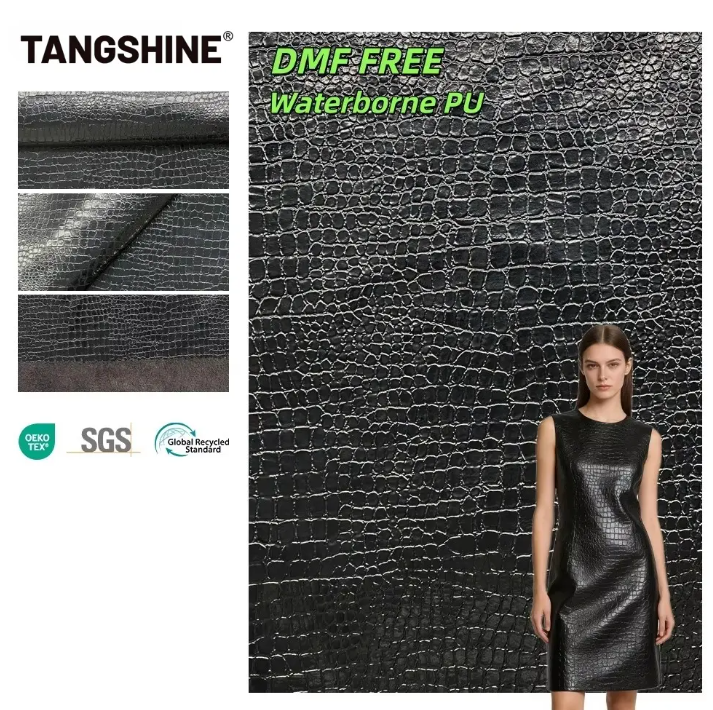
Déanann an t-éagothadh éagsúil athrú thar a bheith seasmhach ar dhorcha an ábhair trí théamh agus brú a chur ar aghaidh trí bhuaicréadáin réidh—ag tiontú fo-thaobhanna sintéiseacha coimpléascacha cosúil le PU, PVC, nó micrea-fhíochán de dhensíocht ard i gceann de na dorchanna saibhre toisí. Cruthaíonn an próiseas seo scálaí fíor-ardaithe agus geataí isteach, ag tabhairt feidearthachta táctil láithreach: aithníonn meáin na mbóthair cinn ard agus gleannanna soiléir agus an t-ábhar ag cur leanúint ar a shainiú. Tá an doimhneacht is coitianta d’éagothadh idir 0.2 mm agus 0.8 mm—go leor chun teacsúr crocódail nádúrtha a shamhlú gan an fíordhiongmhalacht a chur i mbaol. Cuirtear easpa rialaitheach isteach trí bheith ag athrú beag ar bhrú an bhuaicréadáin, ag méadú réalachais. Mar is struchtúrach an t-éagothadh—ní thar a bheith ualach—tá an teacsúr níos faide ina fháil ó chaitheamh ná cromáin ualach agus ní dhífheadh sé le frictiún. Mar a bhíonn sainithe ag ISO 20567-1 (caighdeáin adhéisiú cromáin agus fíordhiongmhalachta teacsúir), bíonn an t-éagothadh ina fhíordhiongmhalacht faoi stres meicniúil atá déanta go minic—agus mar sin is é an rogha is fearr do úsáidí arda, áit a bhfuil an cruinneas radharcach agus an fíordhiongmhalacht ar fad tábhachtach.
Priontáil: Feidhmíocht Datha Cothromach Gan Doimhneacht Táiriseach
Cuirtear patrún crocódil foirfe go díreach ar an mbunús ag baint úsáide as teicneolaíocht digiteach inkeag nó gravúr ar ardcháilíocht—le dath, contraste agus glos a athsholáthar ach gan aon taispeántas fisiciúil a chur leis. Tá an toradh nádúrtha, uachtar cothromach a léiríonn fíor-ghrádúlacht ag an gcéad shealladh ach a bhíonn iomlán cothromach ag an teagmháil. Cruthaíonn teicnící casta leathraíochta—mar shampla dath bun, scáthán tríd an mbord agus varnish glos áirithe—doimhneacht optúil agus spéaclacht, ag imiliú luachra na scála nádúrtha. Ach ní féidir le haon méid de chur in oiriúint inke ag aon chor a athbhreithniú ar an gcomhghaol dimionach idir solas agus dorchadas atá ann i gcrainn théarmach. Tá patrúin chruaite níos mó faoi mhíchumas caithnín agus caithfidh siad a mhothú go soiléir le himeacht ama, go háirithe i réigiúin áit a dtagann an t-ádh is mó leis. Roghnaítear iad go minic do thionscadail táirgeachta a bhíonn faoi bhrú costais nó a bhíonn ar shiúl tapa—mar shampla, freastalaithe móda nó cásanna umartha—áit a mbíonn comhtháthú radharcach tábhachtach ná fíor-ghrádúlacht teagmhála. De réir ASTM D4159-22, taispeánann crícheanna cruaite tuairiscíocht íseal go mór i gcoinne scuffing agus leathnú solvant i gcomparáid le crícheanna téarmacha crainn.
Conas a Bhaineann an Tionscail Mhórchumais an Fíor-Úrú agus an Feidhmíocht den Chuirnín Crocódil Iompaite
An Próiseas Bhriseadh: Teas, Brú, agus cruinneas na ndeathra ar PU/PVC nó ar Mhícreaighleac
Tosaíonn an próiseas a mbainimís le molda metal a rinneadh go speisialta—le léaráid dhíth ar chraiceann crocódil inscríofa air—agus cuirtear i bhfeidhm faoi theas agus brú rialaithe. Nuair a théann an t-ábhar sintéiseach níos bog, éiríonn sé isteach sa mholta, ag dúnadh struchtúr trí-thaobhach buaite. Is criticiúil an réiteach na molde: tá scannán níos finiúla ann ag tabhairt le harrangaimh scála níos lú athdhéanta agus níos mó cosúil leis an nádúr. Úsáideann na ceannairí in an tionscal—including suppliers certified to ISO 9001:2015 for leather alternatives—mbainimís i dtreithníbh éagsúla (mar shampla, réamhbainimís le haghaidh coinníollaithe roimh an léaráid dheireannach) chun taispeáint níos doimhne agus níos glan a bhaint amach le cinn bheag le taobhanna gclósta a thagann le scáthanna nádúrtha. Nuair a fheidhmítear an téacs céanna ar chraiceann ghascair fíor, tá leathar mbainimíseach mar thoradh ann—a mheascán atá ag úsáid intinne an chraicinn nádúrtha agus ag méadú an teacstúir eisctíse. Taispeánann an doimhneacht an ghraing, an sainmhíniú na gcinn agus an conspóid ar phainéil mhóra go díreach an tsochraíochas a úsáidtear i mbunaithe.
Próiseas Priontála: Aláinéadh Incead Dighiteach, Leathrú, agus Rialú Glosa
Tá an priontáil bunaithe ar aláinéadh cruinn in ainneoin il-líonra incead—tonn bhun, scála-chroisbhearna dromchla, agus cota glasa a fheabhsaíonn an glosa—chun rud a thógáil atá creidte amharc illúis. Baintear leas as córas incead nua-aimseartha chun cruinneas ionadaíochta dot faoi 50 µm a bhaint amach, ag ligean do theorainneacha scála réalaitiúla agus grádáin tonálacha ciúine a chruthú. Déanann varnishing spéiseach gloine breise an t-éigeandáil do ghlúin a mhéadú trí solas a athfhriotal go roghnach ar na hionaid ‘ardaithe’. Ach toisc nach bhíonn aon díbhrú fisiciúil ann, tá an dromchla fós cothromach optically—fiú faoi sholas róga nó faoi mheascán. Tá an teorainn seo soiléir i rith tástála feidhmiúil: tá easpa an t-ádhais agus an t-ádhais a thagann le struchtúir a bhíonn ardaithe i bpaisiní a phriontáiltear. Cé gur oiriúnach do bheartaí gearr-thearmach, ní bhíonn crocodile leathar bréige a phriontáiltear ina ghnáth ag fulfilltint na beachtanna feidhmiúla a shocraíodh ag UL 94 (fuarthacht do dhrochsholas) nó EN 14907 (feidhmiúlacht idirnáisiúnta do ghluaisteáin) gan leathraí cosanta breise.
Príomhshamplaí a úsáideann an duine chun crocodile leathar bréige fíor a aithniú
Tástáil teanga: Aithint scála ardaithe vs. dromchla glan, cothromach
Is é an modh aitheantais is sláintiúla ná an teagmháil. Dún do shúile agus súigh le do mhéaraí thar an uirlis: cuirtear crocódíl leathair fheictheach fíor-ghnéitheach ar fáil le freagra tríthoiseach soiléir—buaileanna scála suntasacha, gáinte iompartha, agus aistriú réidh idir iad. Bíonn leathair phriontáilte cothrománach i dtimpeallacht, cibé céim casta is féidir a fheiceáil. Níl an difríocht seo ach amháin de réir crutha, ach tá sí díreach gaolmhar le huaireacht aithníte agus le fadtéarmaíocht fheidhmeach. D’fhionn staidéar 2023 ón Leather Working Group go raibh buaiteoirí B2B ag rátáil ábhair le scálaíocht 37% níos airde i “tuairim uaschórais” nuair a ndearnadh an méid sin gan a bheith in ann an t-ábhar a fheiceáil, ag léiriú ar chaoi a bhfuil an teagmháil ag cur isteach go mór ar an mbreithiúnas ar cháilíocht i mbaganna lámha, i gcaipéisí gluaisteáin agus i mbuailtí mórbhalla.
Inspeictiún radharcach: Athrá patrúin, Athraithe scála agus Miondealú na n-íosmharbh
Taispeáin an t-éadan go dtí an patrún, ach freisin agus é faoi sholas ag leathnú; léiríonn an leathar a bhfuil an patrún ina chroílín ar aghaidh an leathair trasnánach aistriúcháin bog, céimniúla ag na baintis mar gheall ar an mbéil fhisiciúil; tá teorainneacha réadúla, dhá thoiseach idir na dtonnanna sa leathar a bhfuil an patrún clóite air. Féach freisin ar athrá: athraítear patrúin croílínithe ag turgnamh sonrach a bhaineann le leithead an dí, go minic gach 30–60 cm, agus léiríonn craiceann fíorchaol arrachtaí neamh-athráiteacha. Má athraítear clúdaigh an chinniúin i mbeart rialta, bíonn sé sin ag dearbhadh go bhfuil an próiseas bunaithe ar mhaisín. D’fhéadfadh croílíníocht ard-cháilíochta fiú athraithe micre ar aghaidh an dí a chur isteach go dtí an patrún chun an t-athrá a laghdú—téacs a úsáideann soláthraitheoirí de chéad ranga a leanann na caighdeáin DIN 53339 maidir le h-anailís téacsúir an uirlisí. Is iad na comharthaí seo a scarann an fíorthaithíocht ingheanmhara ó imithe ar aghaidh an fíorthaithíochta, agus is iad a thagann i gcion ar chinntiú an fhóntais nuair a bhíonn intinne an mhaighdean agus an taithí a thagann leis an gceannach agus an t-úsáid níos tábhachtaí ná aon rud eile.
