The Sensory Pull of a Suede Surface
There is a moment every late summer when the first samples of the autumn winter collection start arriving in showrooms, and the material that consistently draws the most unconscious hand touches is suede. I remember walking through a buying appointment years ago, watching a buyer deep in conversation with a sales director. As she talked business, her fingers never stopped stroking the sleeve of a suede bomber jacket draped over a chair. She was not even aware she was doing it. That is the power of a napped surface. Suede, whether genuine or synthetic, has a raised fiber finish that traps air and scatters light in a way no glossy or flat material can replicate. It looks warm before you even touch it. The science behind this is straightforward. A smooth surface reflects light directionally, appearing cold and hard. A suede surface, with its millions of tiny standing fibers, reflects light diffusely, creating a visual softness that the human brain translates into a promise of warmth and comfort. This sensory head start is invaluable when you are designing for the colder months. A suede coat on a rack does not just hang there; it beckons.
How Suede Absorbs and Holds Autumn and Winter Colors
The same physical structure that makes suede feel warm also makes it a superior canvas for the deep, moody pigments that define the cooler seasons. Because the surface is covered in microscopic fibers rather than a flat skin, the dye or pigment penetrates and surrounds each fiber strand, creating a depth of color that a smooth grain leather simply cannot achieve. I watched a fascinating comparison once at a material supplier's office. They had taken a single batch of a rich burgundy dye and applied it to a smooth calfskin and a suede split from the same source. The smooth leather looked nice, a solid, serviceable color. The suede was utterly transformed. It drank in the light and the color together, producing a velvety depth that made the exact same dye look dramatically more luxurious. This is why designers return to suede season after season for their statement pieces in burnt orange, forest green, deep plum, and chocolate brown. These are not colors that want to shout; they want to whisper with authority. Suede gives them the perfect acoustic for that quiet, confident voice.
The Practical Performance of Suede in Cooler Climates
Beyond the aesthetic and the tactile, suede actually performs a genuine thermal function. The pile of a suede surface creates countless tiny air pockets that act as a micro insulation layer, trapping body heat far more effectively than a tight, smooth surface. But the real breakthrough in recent years has been in synthetic suede technology. Traditional genuine suede is notoriously vulnerable to water. A sudden rain shower can leave permanent water spots and stiff patches. Modern faux suede, engineered with a microporous PU structure, changes that equation. I recall a footwear brand that was developing a line of winter ankle boots. They tested genuine suede against a high-grade faux suede by submerging both in slushy ice water for an hour. The genuine suede came out soaked, stiff, and took an entire day to dry. The faux suede was damp on the surface but wiped clean, and the inside remained dry because the microporous structure allowed vapor out but blocked liquid water from penetrating. That single test convinced them to switch their entire winter boot line to a premium synthetic. Practicality does not have to dilute the luxury feel, and the right engineered material proves it.
Faux Suede and the Ethical Luxury Shift
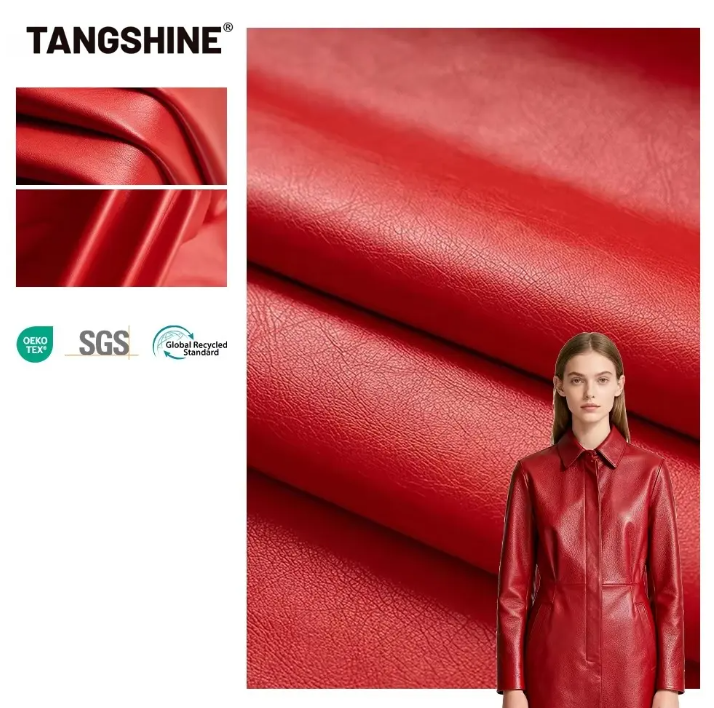
The fashion industry's conversation with its customers has changed fundamentally in the last five years. A growing and vocal segment of consumers, particularly the demographics that drive seasonal fashion spending, actively check whether a product contains animal-derived materials before purchasing. Genuine suede is made by splitting the underside of animal hides, a process that is inseparable from the leather industry's broader environmental and ethical footprint. Faux suede, when made responsibly, sidesteps this entirely. A designer I worked with launched a capsule collection of suede wrap dresses and explicitly labeled the material as "animal-free napped textile" in every product description. The engagement on those product pages, measured by time on page and social shares, was nearly double that of her other pieces. The material was not just a fabric choice; it became part of the product's story that customers felt proud to participate in. When sustainability certifications such as GRS for recycled content or OEKO-TEX for chemical safety are layered onto a beautifully engineered faux suede, the material transforms from a sensible alternative into a positive, marketable asset.
The Styling Versatility That Drives Seasonal Sales
One of the quiet commercial advantages of suede is its chameleon-like ability to unify a collection across multiple product categories. A single suede fabric story can flow from a structured moto jacket, into a soft midi skirt, onto a pair of block-heel pumps, and up into a slouchy hobo bag. This cross category coherence is a retail superpower. I watched a mid market brand do exactly this one autumn. Their entire seasonal window display was built around a single, richly pigmented camel suede. The visual impact was striking because the material created an unbroken narrative. A customer who came in for the jacket noticed the matching boots. Another who picked up the bag immediately asked if the skirt was available in her size. The unified material language increased their average transaction value by over thirty percent that season. It also made the collection instantly recognizable in editorial shoots and on social media feeds, building a cohesive brand image without a single logo needing to be visible.
Material Innovation That Protects the Seasonal Investment
Every designer who has ever worked with natural suede carries a scar. Usually, it involves a sample or a first production run that developed shiny rub marks or bald patches after only a few wears, triggering a season of customer complaints and returns. The anxiety around suede's fragility has historically pushed some brands to avoid it altogether, despite its clear seasonal appeal. Modern material engineering has effectively solved this. Advanced faux suedes now incorporate stain repellent and water repellent finishes at the molecular level, built directly into the coating rather than sprayed on as a temporary afterthought. Abrasion resistance, tested on Martindale machines, can be specified and guaranteed. Colorfastness to rubbing, dry and wet, can be locked in at a Grade 4 or above. This transforms suede from a high-maintenance gamble into a reliable, predictable production material. For a brand that builds its entire autumn winter collection around a suede story, this reliability is not a luxury; it is the foundation of a profitable season. When the manufacturing process, from the initial fiber raising of the base fabric through the controlled PU impregnation to the final protective finishing, is fully integrated under one roof, the consistency of that performance becomes even more assured. A partner like Tangshine, who operates that complete in house production chain, allows a brand to commit to suede with the confidence that the material on the final garment will look, feel, and wear exactly as the original sample promised, season after season.
