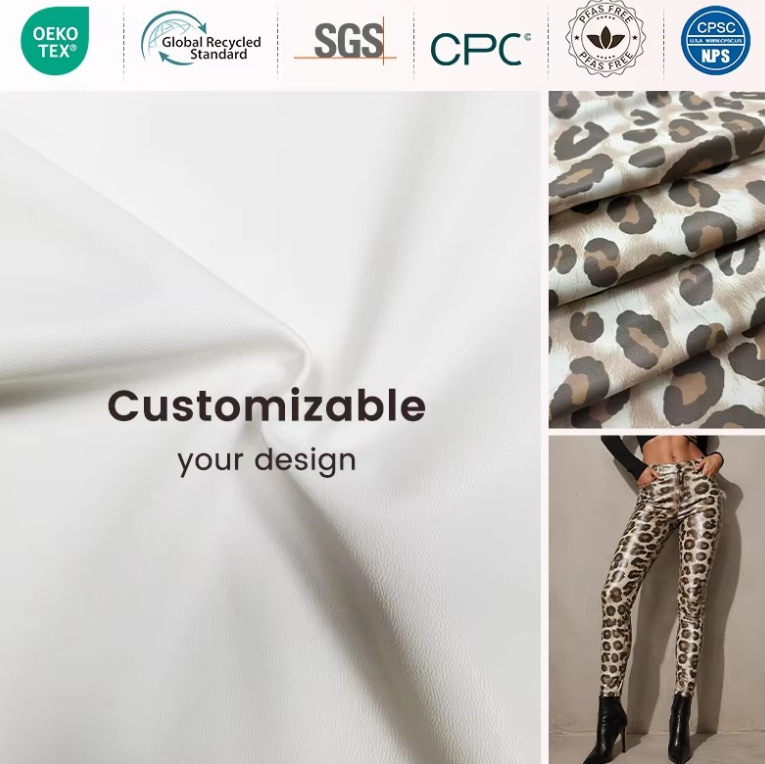
Fluid Drape Mechanics and Low Bending Modulus in Garment Construction
Tailoring an evening gown, a pleated midi skirt, or a bias-cut slip dress requires fabric that obeys gravity rather than fighting against it. Traditional heavy hides and thick upholstery-grade synthetics possess a high bending modulus, meaning the material resists folding and forms boxy, angular cones instead of flowing waves. When patternmakers specify a specialized lightweight dress leather, the goal is achieving liquid-like drape without sacrificing that unmistakablelambskin sheen. In synthetic textile engineering, fluid movement comes from pairing an ultra-thin wet-process polyurethane skin with a low-denier interlock knit or modal-blended backing. During wet coagulation, microscopic sponge-like pores form inside the polyurethane layer, replacing solid polymer mass with tiny air pockets. According to ISO 9073-9 test methods for determining the drape coefficient of fabrics, reducing coating thickness and backing stiffness drops the overall drape coefficient substantially, allowing the garment to skim cleanly over the waist and hips. Instead of standing away from the body like cardboard armor, a low-modulus synthetic skin falls into soft vertical ripples that move naturally with every stride.
Four-Way Stretch Recovery and Seam Flattening on the Sewing Line
Sophisticated silhouettes often rely on figure-hugging darts, princess seams, and ruched waistbands that demand serious mechanical elasticity. If a garment fabric stretches out when the wearer sits down but fails to snap back when standing up, the dress quickly develops unsightly "baggy knees" or a sagging seat. High-grade apparel polyurethane solves this deformation problem through three structural design choices:
-
Elastane-infused warp and weft knit backings: Laminating thin polyurethane onto lightweight spandex-blended tricot or jersey bases allows the composite fabric to stretch smoothly in four directions while meeting ASTM D3107 stretch and recovery benchmarks.
-
Low-friction silicone and wax topcoats: Applying a microscopic slip agent to the outer polyurethane surface prevents adjacent pleats or crossed wrap panels from sticking together or making squeaking noises when the wearer walks.
-
Compressible seam allowances: Because total fabric thickness stays between zero point four and zero point six millimeters, four overlapping layers at a side zipper junction press flat under a warm iron with a Teflon shoe, eliminating bulky seam ridges.
Comparing Synthetic Leather Grades Across Apparel Silhouettes
Selecting the right synthetic substrate depends on whether the pattern calls for flowing pleats, second-skin compression, or structured outerwear shoulders.
| Fabric Grade Category | Typical Thickness & Weight | Drape Coefficient Profile | Stretch & Recovery Behavior | Ideal Garment Silhouette |
|---|---|---|---|---|
| Ultra-Light Apparel PU | 0.45 mm to 0.60 mm (160 to 220 gsm) | Very low, fluid silk-like hang | High four-way stretch with instant snap-back | Gathered maxi dresses, wrap skirts, draped blouses |
| High-Stretch Bodysuit PU | 0.50 mm to 0.70 mm (220 to 260 gsm) | Low to moderate, contours tightly | Extreme multi-axial elongation | Fitted catsuits, tight bodysuits, leggings, gloves |
| Medium Jacket & Pant PU | 0.75 mm to 1.00 mm (300 to 400 gsm) | Moderate, holds tailored curves | Controlled weft stretch for elbow comfort | Moto jackets, straight-leg trousers, raincoats |
| Heavy PVC & Upholstery Grade | 1.10 mm to 1.60 mm (500 to 800 gsm) | High stiffness, resists tight folding | Minimal stretch, high tensile rigidity | Structured handbags, furniture, car seats, cases |
The material matrix above illustrates a clear boundary for fashion buyers: while heavy polyvinyl chloride and thick polyurethane provide necessary structural armor for luggage, car seats, and sofa cushions, forcing those rigid grades into a gathered waistline creates clumsy bulk that ruins a tailored silhouette.
Field Lessons from a New York Ready-to-Wear Collection
Ignoring weight-to-drape ratios during early prototyping can derail an entire seasonal apparel line once bulk sewing begins. During a spring ready-to-wear development for a contemporary womenswear label in New York, a design team drafted an asymmetric wrap dress featuring a tightly shirred bodice and a cascading waterfall hemline. To cut fabric costs, the sourcing coordinator substituted a standard zero-point-nine-millimeter jacket-weight polyurethane backed with brushed polyester fleece in place of a dedicated lightweight dress leather. When the sample room stitched the first size-run, three immediate construction failures occurred. First, the shirred bodice refused to gather evenly, bunching up into thick, rigid rolls that added two inches of visual bulk around the ribcage. Second, the heavy waterfall ruffle pulled downward on the bias seam, twisting the side zipper out of alignment. Third, models complained that the brushed fleece backing trapped body heat under studio lighting within minutes. Switching the production run to a zero-point-five-millimeter microporous polyurethane bonded to a breathable, lightweight rayon-spandex jersey backing transformed the garment immediately. The shirred pleats compressed cleanly under the sewing foot, the asymmetric hem hung with effortless fluidity, and the breathable backing kept the dress comfortable for all-day wear.
Breathability Boundaries and Sourcing Versatile Apparel Fabrics
While modern synthetic dress fabrics mimic fine nappa leather remarkably well, honest material selection requires matching surface finishes to real-world wear conditions. High-gloss patent polyvinyl chloride and metallic-foiled skins used for statement raincoats or stage catsuits have lower water-vapor permeability than matte microporous polyurethane, so garment designers should incorporate breathable lining panels or strategic ventilation cuts for warm-weather styles. Furthermore, delicate lambskin-touch coatings require Teflon presser feet and fine ballpoint sewing needles so feed dogs do not mar the buttery surface during assembly.
For fashion brands, garment factories, and textile wholesalers seeking consistent drape and color accuracy across large production runs, Tangshine combines over two decades of synthetic PU and PVC R&D with a massive coating factory and a sixteen-machine digital printing plant. By controlling polymer softness, backing elasticity, and bespoke digital prints across a complete portfolio covering dresses, leggings, jackets, furniture, and automotive upholstery, the team delivers reliable, one-stop fabric solutions for global markets.
Table of Contents
- Fluid Drape Mechanics and Low Bending Modulus in Garment Construction
- Four-Way Stretch Recovery and Seam Flattening on the Sewing Line
- Comparing Synthetic Leather Grades Across Apparel Silhouettes
- Field Lessons from a New York Ready-to-Wear Collection
- Breathability Boundaries and Sourcing Versatile Apparel Fabrics
