The Waste Crisis That Sparked a Material Revolution
This is a story born on the cutting room floor. A friend who ran a mid-size leather goods brand once walked me through his production facility. In the corner sat enormous bins overflowing with irregular trimmings, discarded panels with small surface scars, and the odd-shaped voids left after clicking out pattern pieces from whole hides. He told me, with a heavy voice, that nearly forty percent of every hide they purchased ended up in those bins, destined for landfill. That visual stuck with me for years. The traditional leather industry operates with a startling waste rate. Between the tanning process, which generates chemical-laden sludge, and the cutting process that discards irregular edges, the United Nations Industrial Development Organization has long highlighted leather production as a sector urgently needing cleaner resource management. Recycled leather emerged from this exact pain point. It transforms what was once considered industrial waste into a legitimate, beautiful, and functional material. That shift from a linear “take-make-dispose” mentality to a circular “collect-process-reuse” model is the fundamental reason for its momentum.
What Exactly Is Recycled Leather and How Is It Made
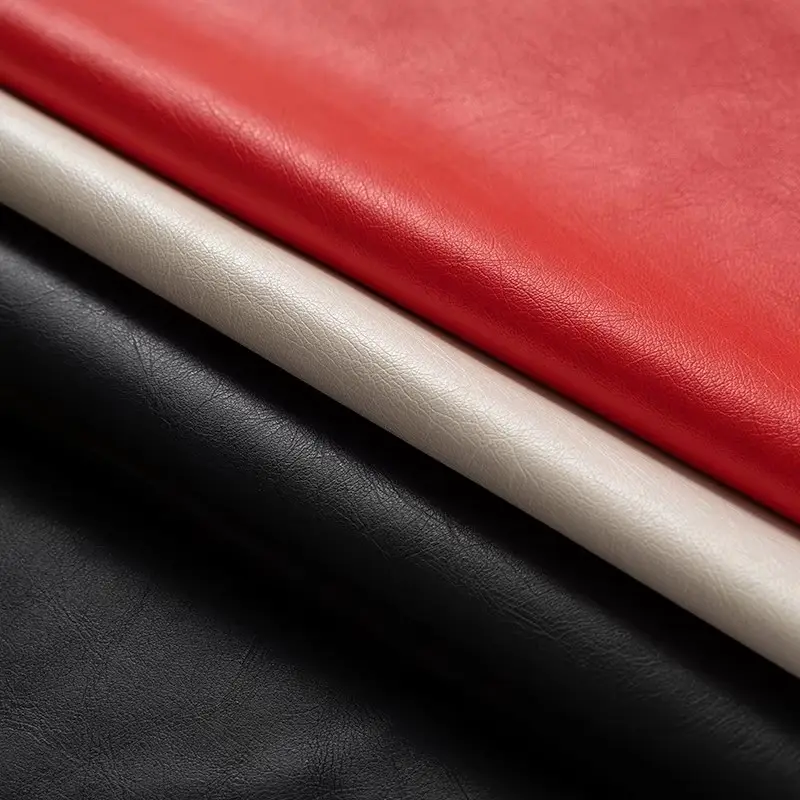
The term “recycled leather” can be confusing because it is not simply shredded leather glued back together. The process is far more sophisticated. Genuine leather scraps, post-industrial trimmings from tanneries, cutting rooms, and even post-consumer leather goods, are first sorted and cleaned. They are then mechanically defibrillated, ground down into a fine, consistent fiber. This leather fiber is the hero ingredient. It is then blended with a binding agent, which today is increasingly a natural latex or a water-based polyurethane, avoiding the harsh solvents of the past. This mixture is then laid out, compressed under intense pressure, dried, and finished with surface coatings and embossing. I remember holding the first high quality recycled leather sample I ever saw. It had this incredibly warm, slightly nubby hand feel, a subtle leather scent, and a surface uniformity that was frankly better than many natural hides. That consistency comes from engineering, not agriculture. For a buyer, the key to specifying genuine recycled leather lies in asking about the leather fiber content, the type of binding agent used, and whether the material carries a recognized third-party certification like GRS. A truly premium recycled leather can contain over sixty percent genuine leather fiber, which is what gives it the authentic character while still delivering on the eco-promise.
The Environmental Math That Clicks With Conscious Consumers
Today’s consumer is no longer satisfied with a generic “eco-friendly” sticker. They want receipts. Recycled leather provides a very tangible, very communicable environmental equation. A lifecycle analysis typically shows that recycled leather production consumes significantly less water, avoids the chrome tanning and liming steps that generate heavy effluent, and directly diverts solid waste from landfill. The carbon math alone is persuasive. By using pre-existing leather fibers, you avoid all the greenhouse gas emissions associated with cattle raising, from methane to land-use change. This is why many brands now proudly display the specific environmental savings on their product tags: “This bag diverted 1.2 kilograms of leather waste from landfill,” or similar. I worked with a stationery brand that switched to recycled leather for a notebook cover and printed the material’s sustainability backstory directly inside the front flap. Their online conversion rate for that SKU jumped over twenty percent within the first quarter. When a material carries a story that the end customer feels proud to share on social media, it becomes a powerful marketing engine that no paid advertisement can match.
The Performance and Aesthetic Evolution
For years, recycled materials carried a stigma. The assumption was you had to sacrifice quality for sustainability. That era is over. Modern recycled leather is structurally robust, with a tightly interlocked fiber matrix that provides excellent tear strength and abrasion resistance. The surface can be embossed, buffed, or coated to achieve nearly any finish, from a matte suede-like touch to a high-gloss patent shine. Because the fiber base is uniform, digital printing on recycled leather often yields sharper, more color-accurate results than on natural hides. A bag manufacturer once told me they actually preferred recycled leather for their signature structured tote. The reason was pure business: natural hides varied in thickness across the surface, causing occasional stitching failures and scrap. The recycled sheets, in contrast, had a dead-flat profile and a consistent gauge from edge to edge. That uniformity meant smoother production, fewer rejects, and more predictable cost control. The material did not just sell better on the sustainability angle; it performed better on the factory floor.
Recycled Leather and the Circular Economy Narrative
Recycled leather is not a standalone product; it is a chapter in a much larger circular economy story. A brand that genuinely commits to circularity can design a product with recycled leather, ensure its lining is recycled polyester, use thread that is biodegradable, and design the item to be easily disassembled at end of life. Policy is now accelerating this shift. The European Union’s Sustainable Product Eco-design Regulation is pushing for mandatory recycled content in certain product categories within this decade. Brands that start integrating recycled leather now are not just riding a marketing trend; they are building supply chain readiness for upcoming compliance requirements. I saw a young fashion label win a prestigious design award recently, not purely for its aesthetics, but because its entire entry was made from recycled leather and recycled ocean plastic, accompanied by a detailed end-of-life take-back plan. The award jury explicitly cited the material story as the differentiating factor. Recycled leather opens a door for brands to participate in a systemic solution, moving beyond harm reduction toward actively restoring the planet’s material balance.
Integrating Recycled Leather Into A Brand’s Supply Chain
Adopting any new material is never a simple swap. It requires a partner who understands not just the material, but the entire ecosystem around it. I have seen brands attempt to bring recycled leather into their line, only to stumble on technical hurdles: the first samples delaminated in humid conditions, or the colorfastness failed on a crocking test. Iteration is essential, and rapid, expert iteration is what separates a failed trial from a successful launch. This is where the depth of a manufacturer truly matters. A company that operates a vertically integrated system, blending its own coatings, managing its own embossing, and testing every batch against international environmental and performance standards, can shepherd a brand through the transition with certainty. When a supplier like Tangshine makes “green more than a color” a core operating principle, specifically investing in Zero DMFA, PFAS-free, and recycled leather production lines, they are not just selling a product; they are providing a supply chain guarantee. They ensure that the material on your final product is not only authentically sustainable but also performs impeccably on the factory floor, arrives on time, and meets the rigorous documentation requirements that global retailers demand. That comprehensive capability is what turns a promising eco-material into a market-winning product line.
Table of Contents
- The Waste Crisis That Sparked a Material Revolution
- What Exactly Is Recycled Leather and How Is It Made
- The Environmental Math That Clicks With Conscious Consumers
- The Performance and Aesthetic Evolution
- Recycled Leather and the Circular Economy Narrative
- Integrating Recycled Leather Into A Brand’s Supply Chain
