The Shift Happening on Runways and in Showrooms
Walk through any premium accessories showroom and the change is noticeable. Crocodile textured bags, belts, and small leather goods are showing up in collections that once would have used exotic skins exclusively. The difference is that many of these pieces are not made from animal hides at all. Faux crocodile leather has moved from a budget substitute to a legitimate design material, and designers are choosing it deliberately rather than reluctantly. The reason is a mix of ethics, cost predictability, material performance, and regulatory pressure. What used to be a compromise has become a design decision that luxury brands are willing to discuss openly.
Why the Exotic Leather Market Is Under Pressure
Real crocodile and alligator leather comes with a set of complications that have grown harder to ignore. Sourcing is limited, prices fluctuate, and supply chains are complex to trace. Animal welfare concerns have intensified, and a growing share of luxury consumers now actively avoid exotic skins. Regulatory pressure has also increased, with several countries tightening restrictions on the trade of exotic leather goods. For a designer working on a collection that needs to ship to multiple markets, these factors add risk and complexity. Faux crocodile leather removes most of those issues. It can be produced in consistent quantities, shipped without special documentation, and positioned to customers without the ethical caveats that come with real exotic skins.
How Modern Faux Crocodile Leather Is Made
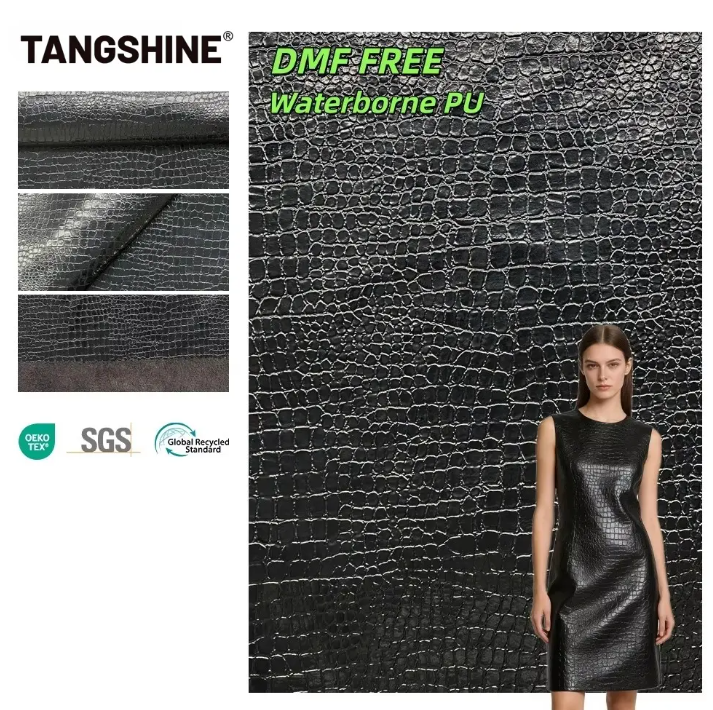
The material has come a long way from the stiff, plastic looking versions of previous decades. Today's faux crocodile leather typically starts with a fabric backing, often knit polyester or cotton, which is coated with a polyurethane layer. The crocodile texture is created by embossing the surface with a heated die that presses the scale pattern into the coating. The quality of the embossing determines how realistic the result looks. A well made die produces scales with natural variation, depth, and a slight irregularity that mimics real hide. The table below compares key properties.
| Property | Faux Crocodile Leather | Real Crocodile Leather |
|---|---|---|
| Consistency across batch | Excellent | Variable |
| Color range | Unlimited | Limited to dye options |
| Water resistance | Good | Variable |
| Weight | Light | Moderate |
| Relative cost | Low to medium | Very high |
| Animal welfare concerns | None | Significant |
| Regulatory complexity | Low | High |
The pattern is that faux crocodile offers designers more control over the final result while avoiding the complications of real exotic skins.
The Design Advantages Designers Actually Care About
Cost and ethics get most of the attention, but the design advantages are what keep designers coming back. A few factors matter most.
-
Unlimited color options, since the coating can be tinted to any shade without the constraints of natural hide.
-
Consistent scale pattern from piece to piece, which makes production planning easier.
-
Adjustable hand feel, from soft and drapey to firm and structured.
-
Custom embossing dies, which allow a brand to develop a signature texture.
-
Easier cutting and stitching, since the material has uniform thickness and no weak spots.
A designer working on a capsule collection once described how the ability to match the faux crocodile texture exactly to the color of a hardware finish made the whole collection feel more cohesive. That kind of control is difficult with real skins, where color and texture vary from hide to hide.
Where the Material Performs and Where It Has Limits
Faux crocodile leather works well for handbags, small leather goods, belts, shoes, and interior trim. It is less suited to applications that demand extreme durability over decades, or to products where the customer specifically expects genuine exotic skin. It can also struggle in very hot environments with some formulations, and lower grade products may crack in cold weather. The honest position is that faux crocodile is a strong choice for most luxury applications, but it is not a universal replacement for every use case. Designers who understand the limits make better decisions about where to use it and where to use something else.
How Sustainability Claims Hold Up
Sustainability is a big part of the story, but it needs to be examined carefully. Faux crocodile leather avoids the animal welfare and biodiversity concerns of the exotic leather trade, which is a real benefit. It also uses less land and water than livestock farming. On the other hand, polyurethane is a petroleum based material that does not biodegrade easily, and production involves energy and chemicals. Some manufacturers are moving toward water based polyurethane and recycled content to reduce the footprint. Certification programs such as the Global Recycled Standard and Oeko-Tex 100 provide third party verification that helps brands make credible claims. The honest framing is that faux crocodile is more sustainable than real exotic leather in most measures, but it is not automatically a green material. It depends on how it is made and how long it lasts.
How Manufacturing Expertise Supports Design Intent
Faux crocodile leather is only as good as the embossing die and the coating process behind it. Scale depth, pattern consistency, and color accuracy all depend on manufacturing control. Tangshine has been producing leather materials for the fashion and accessories markets, with a focus on formulations that meet international standards including Oeko-Tex 100 and REACH compliance. The production process controls embossing temperature, pressure, and coating thickness, which directly affect how realistic and durable the final material is. For designers and brands that need faux crocodile leather that delivers on both aesthetics and performance, that attention to process detail at the source is what makes the difference.
Table of Contents
- The Shift Happening on Runways and in Showrooms
- Why the Exotic Leather Market Is Under Pressure
- How Modern Faux Crocodile Leather Is Made
- The Design Advantages Designers Actually Care About
- Where the Material Performs and Where It Has Limits
- How Sustainability Claims Hold Up
- How Manufacturing Expertise Supports Design Intent
