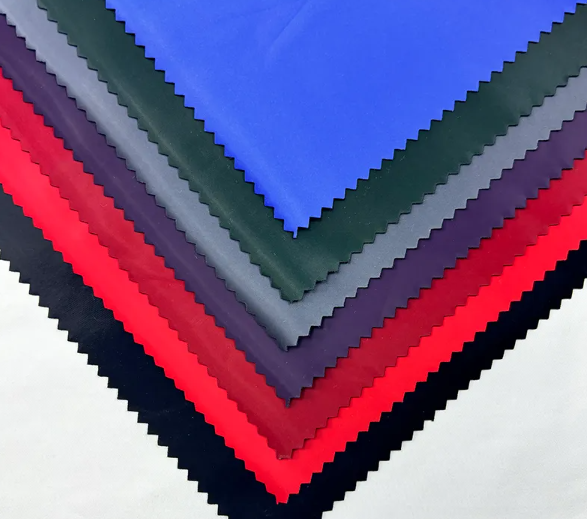
Defining the Composition of the Stretch Leather
Before you even think about the color or the shine on the surface, you have to lock down exactly what the material is made of. Stretch leather for activewear is almost never genuine animal hide; it is a composite wonder built on a knitted or woven fabric backing, coated with polyurethane or sometimes microfiber. The backing is where performance lives or dies. I once worked with a startup that launched a line of sleek yoga leggings made from a lovely, buttery soft material. They looked incredible on the rack, but after three wash cycles, the fabric had bagged out at the knees and never recovered. The root cause was a plain polyester base cloth with zero memory. What they actually needed was a high gauge nylon spandex knit as the foundation. That composition gives the material the snap back it needs to survive a deep squat or a lunge. Before you sign a purchase order, ask your supplier for a detailed breakdown of the base cloth fiber content and the stretch recovery percentage. That one sheet of data will tell you more about performance than a hundred glossy swatches.
Specifying Weight, Hand Feel, and Thickness
The weight you choose, typically measured in grams per square meter or ounces per square yard, is the most underrated factor in how the garment will actually perform. A heavier skin, say something over 500 grams per square meter, has a lot of substance. It drapes like armor, holding its shape and providing a fantastic sculpting effect for outerwear pieces like moto jackets or high waisted shaping leggings. A lighter material, around 300 grams per square meter, is what you want for a second skin feel, ideal for tops or layering pieces that need to move with the body without fighting it. I recall a brand that insisted on a thick, luxurious weight for a racerback sports bra. The fabric was beautiful, but its inherent stiffness fought the curved seams of the design. During stitching, the feed dogs on the sewing machine stretched the lower ply while the top ply buckled, creating ugly, puckered seams everywhere. Hand feel is equally critical. Terms like “peach skin finish” or “rubberized grip” must be physically defined by an approved sample, because your idea of silky and your tanner’s idea of silky might be miles apart.
The Make or Break Detail: Stretch Direction and Recovery
This is the technical canyon where many brands get lost. A two way stretch fabric extends in one direction, usually from selvedge to selvedge. This works for a tailored moto pant where you only need horizontal give across the thigh. Activewear, however, lives in three dimensions. When a body is doing burpees or a yoga flow, the material is pulled in every axis at once. This demands true four way stretch, meaning the fabric stretches and, crucially, recovers on both the warp and weft axes. You need to specify the minimum elongation percentage and the recovery rate. A reading of 95% recovery or above after a standard stretch test is non negotiable for anything being worn for high impact training. I saw a comparison between two brands once. One used a high modulus two way stretch leather for a cycling short and got rave reviews for its compression. The other tried using a similar material for a cross training tight and got slammed with returns because the material simply could not handle a full range of lateral movement. Let the primary movement pattern of the sport dictate the required modulus and stretch axis.
Colorfastness, Print Adhesion, and Surface Finish
An activewear garment lives a hard life. It gets soaked in sweat, rubbed against gym equipment, and thrown into the laundry at high heat. The surface of your custom stretch leather has to survive this abuse without transferring color onto a white yoga mat or, worse, someone else’s skin. You must specify the colorfastness to perspiration and to rubbing, in both dry and wet conditions. A good benchmark is a Grade 4 or higher on standard AATCC testing protocols. If you are applying a custom print, the adhesion of that ink or pigment to a coated leather surface is an entirely separate challenge. A memorable failure involved a brand that did a beautiful, high density geometric print on a shiny PU leather for a pair of compression shorts. After just one month of wear, the crotch area print had completely disintegrated due to friction. The supplier had used a surface print, not a deep penetrated print or a protective topcoat sealant. The lesson is simple: test your printed material on a Martindale abrasion machine and specify the number of cycles the print must withstand without visible damage before a single yard enters production.
Breathability, Moisture Management, and Odor Control
The phrase “leather activewear” can sound like an oxymoron if you have ever worn a cheap vinyl jacket on a warm day. Real performance stretch leather must breathe. This is achieved through microporous PU coatings that create billions of tiny holes. These structures are large enough to let water vapor molecules from sweat escape, but small enough to repel liquid water droplets, effectively making the material waterproof breathable. The backing fabric also plays a role. A polyester microfiber backing specifically engineered for wicking will pull moisture off the skin and push it to the surface to evaporate. I worked with a premium athleisure brand that overlooked breathability completely, seduced purely by a stunning metallic finish. The first batch of leggings sold out instantly, and then the returns floodgates opened with complaints of unbearable heat and skin rashes. They had to scrap the entire line. Insist on a water vapor transmission rate test and do a real world wear test on a hot body before committing.
Order Quantities, Lead Times, and Color Matching
The commercial side of specifying custom leather is just as critical as the technical side. A small or emerging brand rarely has the budget to sit on thousands of yards of inventory. You need a manufacturer who can accommodate realistic minimum order quantities for custom development, without your unit price becoming absurd. You also need clarity on the lab dip and color matching process. I have seen a promising brand order a full production run of a deep burgundy leather, only to receive a shipment that looked closer to a brick red. The culprit was the difference between the small lab dip sample which the brand approved and the large scale dye lot, which no one had checked before cutting. A professional supplier uses a spectrophotometer to measure color coordinates under controlled light sources, specifying the Delta E tolerance. You must agree on that tolerance beforehand. This is where a vertically integrated manufacturer brings a massive advantage. A company like Tangshine, which controls everything from base fabric knitting and coating formulation to embossing and final inspection in house, can manage these tight color tolerances and quality checkpoints far more effectively than a trading company that outsources every step. When your reputation depends on your product showing up looking and performing exactly as you dreamed, that depth of manufacturing control is not just a feature; it is the foundation of a trustworthy supply partnership.
Table of Contents
- Defining the Composition of the Stretch Leather
- Specifying Weight, Hand Feel, and Thickness
- The Make or Break Detail: Stretch Direction and Recovery
- Colorfastness, Print Adhesion, and Surface Finish
- Breathability, Moisture Management, and Odor Control
- Order Quantities, Lead Times, and Color Matching
