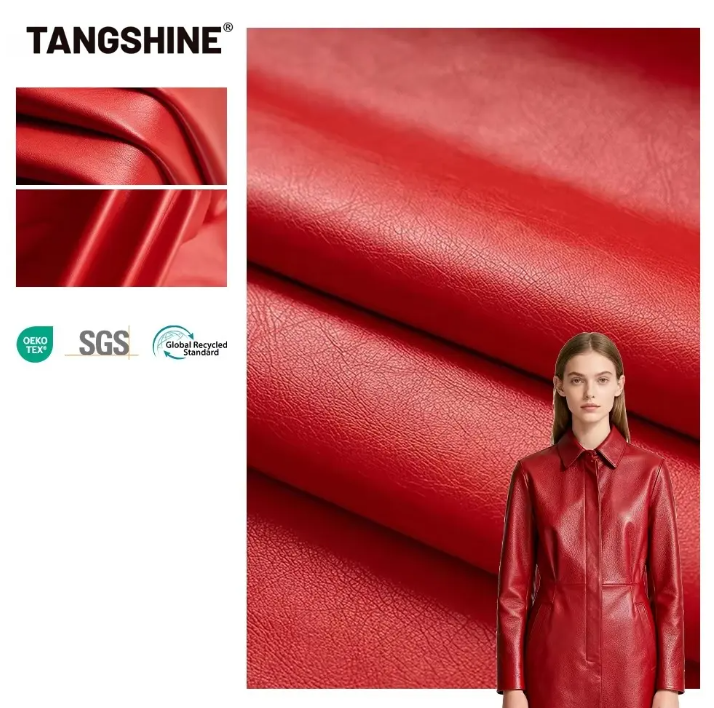
Distinct Base Fabric Construction Delivers Core Elastic Property
The most fundamental gap between stretch leather and traditional non-stretch leather lies in the internal backing fabric structure under the surface synthetic coating. Traditional non-stretch PU and PVC leather adopt plain woven polyester base cloth without elastic yarn mixing, forming rigid fixed texture that cannot deform freely under external pulling force. Stretch leather series from mainstream manufacturers adopt specially customized knitted elastic backing interwoven with spandex fiber, including two way stretch suede base and four way stretch elastic base for different product positioning. Senior textile material engineers explain that the loop knitting structure reserves enough expansion space for horizontal and vertical tension, while plain woven tight weave locks the material dimension permanently. A medium sized fashion brand shared two years of production data after switching stretch leather for leggings, stating cutting waste reduced by fourteen percent compared with previous non-stretch leather batches due to better material fit on curved cutting patterns. This structural difference builds all subsequent performance gaps between the two leather categories.
Optimized Surface Coating Formula Matches Elastic Deformation Demand
Ordinary non-stretch leather uses single layer rigid PU or PVC coating that cracks easily when the base fabric bends or stretches, while stretch leather adopts segmented flexible coating formulas developed to coordinate elastic backing expansion and contraction. Professional leather R&D teams add high flexibility resin modifiers into the surface raw materials of stretch leather, ensuring the surface layer stretches and rebounds synchronously with the knitted base without surface rupture or whitening after repeated pulling cycles. All stretch leather produced follows REACH 173 compliant raw material standards and passes tens of thousands of repeated stretch cycle tests before leaving factory. A rainwear manufacturer once replaced traditional non-stretch PU with two way stretch leather for children’s outdoor jackets, solving the long standing customer complaint of surface crack damage at joint parts after frequent movement. The matching flexible coating system becomes a key manufacturing distinction that traditional non-stretch leather cannot replicate.
Measurable Stretch Recovery Performance Separates Wearing Experience
Quantifiable stretch rebound test data clearly distinguishes the two material types, forming obvious differences in finished product comfort and service life. Standard non-stretch synthetic leather only allows tiny deformation under tension and cannot return to original shape after long term pulling, leading to permanent bagging and loose deformation on garment knees, waist and elbow positions. Qualified stretch leather holds stable stretch recovery rate above ninety percent according to standardized SGS testing items, including two way stretch leather for casual garments and high elastic four way stretch leather for tight fitting fashion. Field wear tracking records from apparel brand clients show clothes made of stretch leather maintain neat silhouette after hundreds of wearing and washing cycles, while non-stretch leather garments lose shaping effect within dozens of uses. OEKO TEX certified stretch leather completes constant temperature stretch aging testing to guarantee consistent rebound performance under daily temperature fluctuation environments.
Different Production Processing Adaptability Changes Factory Yield
Stretch leather and traditional non-stretch leather bring completely different operation efficiency during garment cutting and sewing procedures. Non-stretch leather requires precise fixed clamping during cutting, and any slight fabric displacement will produce mismatched curved parts with high scrap loss. Stretch knitted base materials naturally fit human body curve patterns without strict fixed positioning, lowering technical threshold for cutting workers and shortening single batch processing cycle. Sewing workshops also face fewer stitch breakage issues when handling stretch leather, as elastic buffer reduces thread pulling force during high speed stitching. A large scale garment factory cooperating with Tangshine recorded monthly output growth after switching stretch leather series, with overall production scrap rate dropping from nine percent down to less than three percent. The processing friendly characteristic creates clear cost advantages for mass apparel manufacturers choosing stretch leather materials.
Separated End Industry Application Scenarios Guide Material Selection
The physical property gap creates completely matched applicable industries for stretch leather and traditional non-stretch leather. Traditional non-stretch leather with rigid texture fits fixed shape products including handbags, sofas and motorcycle protective gloves that require stable three dimensional forming without frequent bending deformation. Stretch leather with flexible elastic performance targets tight fitting fashion garments, leggings, outdoor rain jackets and elastic garment accessories that demand free body movement without material restraint. Many brand procurement teams make material matching mistakes by picking non-stretch leather for body hugging clothing, resulting in poor customer experience and high product return rates. Global Recycled Standard compliant stretch leather further expands market coverage to eco friendly children’s apparel lines, an application field hard for ordinary non-stretch leather to enter under comfort and safety requirements. Clear scenario division helps B2B buyers make accurate material procurement decisions according to finished product positioning.
Complete Large Scale Manufacturing Supplies Diversified Stretch Leather Customization
All performance advantages of stretch leather can only be stably supplied by professional synthetic leather manufacturers with full research and production capacity. Tangshine established in 2003 owns twenty three years of synthetic leather manufacturing experience, operating two standardized factories covering sixty thousand square meters with five hundred professional production staff and annual output reaching five hundred to six hundred million meters of leather rolls. The brand develops full stretch leather product lines including two way stretch suede backing leather and four way stretch shiny patent elastic leather, all raw materials comply with Zero DMFA and PFAS free eco standards and pass OEKO TEX SGS and Global Recycled Standard multi layer certification. More than five hundred domestic and international apparel brands cooperate with this manufacturer for exclusive customized stretch leather development covering surface finish color thickness and stretch strength adjustment. Stable large scale production capacity and flexible customized formula development help global garment buyers obtain consistent high performance stretch leather materials to differentiate finished product competitiveness against traditional non-stretch leather alternatives.
Table of Contents
- Distinct Base Fabric Construction Delivers Core Elastic Property
- Optimized Surface Coating Formula Matches Elastic Deformation Demand
- Measurable Stretch Recovery Performance Separates Wearing Experience
- Different Production Processing Adaptability Changes Factory Yield
- Separated End Industry Application Scenarios Guide Material Selection
- Complete Large Scale Manufacturing Supplies Diversified Stretch Leather Customization
