Start With the End Use, Not the Swatch
Selecting leather fabric for clothing is less about picking a pretty surface and more about matching polymer, backing, finish, and test data to how a garment will be worn. Jackets, leggings, gloves, raincoats, catsuits, and tight bodysuits each punish different weaknesses. Belts and trim may tolerate a firmer hand, but they still need colorfastness and edge durability.
The first practical question is simple: what movement will the garment see? If the answer includes repeated bending, stretching, or abrasion, the leather fabric for clothing must be specified with those motions in mind. A soft swatch on a table tells almost nothing about how a coated fabric behaves after 10,000 flex cycles or a humid week in a warehouse.
Material Chemistry Drives Comfort and Durability
PU and PVC dominate synthetic apparel leathers, but they are not interchangeable. PU usually offers a softer hand, better drape, and more moisture vapor transmission because its polymer backbone can include hydrophilic segments. PVC often brings stronger water resistance and lower raw material cost, yet plasticizers can migrate over time. That migration may cause stiffening, tackiness, or cracking, especially in hot climates or closed storage.
A common mistake is choosing PVC for a fitted garment because the initial sample feels flexible. After a few weeks, the plasticizer moves, the hand changes, and the fit becomes unpredictable. For close fitting apparel, PU systems with hydrolysis resistant chemistry and a knit backing tend to hold up better. For rainwear or utility items where waterproofing is priority, PVC may still be right, provided the formulation meets current chemical restrictions.
| Selection factor | Typical PU apparel leather | Typical PVC apparel leather | What to verify |
|---|---|---|---|
| Thickness range | 0.45 to 1.10 mm | 0.50 to 1.30 mm | Consistent gauge across rolls |
| Elongation | 250 to 500 percent | 180 to 400 percent | Enough stretch for leggings and bodysuits |
| Cold flex | Often reliable to about -20 C | Highly plasticizer dependent | Winter gloves and outerwear |
| Moisture vapor | Moderate to high | Low unless perforated | Comfort in long wear |
| Key risk | Hydrolysis in hot humidity | Plasticizer migration | Accelerated aging data |
Those ranges are production guides, not guarantees. Actual values depend on coating weight, backing, and finish. ASTM D5034 for tensile strength, ASTM D4157 for abrasion, and ISO 11640 for colorfastness to rubbing are useful reference points when comparing supplier data. REACH restrictions on certain phthalates and azo dyes also matter for apparel sold into Europe. OEKO-TEX Standard 100 is another recognized benchmark for harmful substance limits.
Tests That Reveal Real World Performance
Lab tests only earn trust when they mimic the field. A supplier can report a high abrasion number, but if the test uses a different backing or coating weight than the production lot, the result is close to meaningless. Purchase specifications should tie every test to the exact construction: base fabric, coating formula, surface finish, and color.
During a humid summer run in southern China, a garment team found a PU coated knit passed initial flexibility checks but cracked after 72 hours in a 70 C, 95 percent relative humidity chamber. The failure was invisible on the sample card. It appeared only after hydrolysis aged the coating. The fix was a different PU system with a hydrolysis stabilizer and tighter incoming inspection. That scenario is why accelerated aging belongs in approval flow for apparel leather, not just furniture or automotive leather.
For clothing, the most revealing checks usually include:
-
Flex fatigue at low temperature for gloves, jackets, and rainwear.
-
Stretch and recovery for leggings, catsuits, and tight bodysuits.
-
Colorfastness to rubbing, perspiration, and light for printed or dyed surfaces.
-
Coating adhesion after repeated bending and washing, if wash care is claimed.
-
Phthalate, azo dye, and heavy metal screening for market compliance.
Backing, Weight, and Hand Feel Decide the Cut
The backing is not minor. A knit backing gives stretch and recovery, suiting leggings and body hugging garments. A woven backing offers dimensional stability for structured jackets and bags. Nonwoven backing can lower cost, but it may delaminate or lose shape under repeated stress. Coating weight and total grams per square meter affect drape, seam bulk, and skin feel.
Hand feel balances softness, surface friction, and temperature. A buttery PU may look premium but snag easily. A dry, matte finish may resist fingerprints but feel rougher on bare skin. For gloves, the palm needs grip without excessive tack. For dresses and jackets, drape and surface uniformity often matter more than maximum stretch. The right choice depends on cut, lining, seam type, and end use, not a single number.
Color, Surface, and Compliance Are Not Afterthoughts
Prints and embossed surfaces add value and risk. Digital printing can deliver sharp logos and small runs, yet ink adhesion and crocking must be tested on the final coated surface. Embossing can hide minor substrate defects, but deep patterns may thin the coating and reduce flex life. Metallic and high gloss finishes often show scratches more readily than matte finishes.
Compliance should be mapped before bulk production. Europe, North America, and other regions set different limits for phthalates, azo dyes, formaldehyde, and heavy metals. A supplier with batch linked test reports, traceable raw materials, and stable color matching reduces the chance of customs holds or brand returns.
Match the Supplier to the Risk Profile
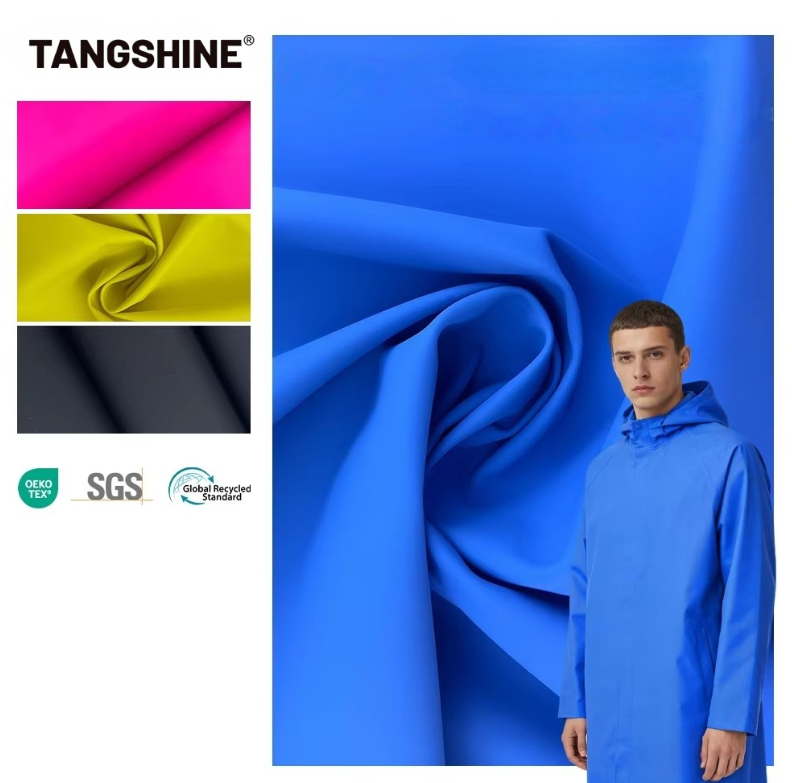
The best supplier fit is not always the cheapest or largest. The better match understands the garment category, controls coating and backing together, and repeats hand feel across seasons. Tangshin, a synthetic PU and PVC leather specialist since 2003, supports apparel and industrial programs with in-house coating, a 60,000-square-meter factory, and integrated digital print capacity. That combination helps buyers reduce split sourcing, tighten batch consistency, and move from sample approval to bulk production with fewer surprises. The right leather fabric for clothing comes down to matching chemistry, construction, test evidence, and manufacturing discipline to how the garment will live.
