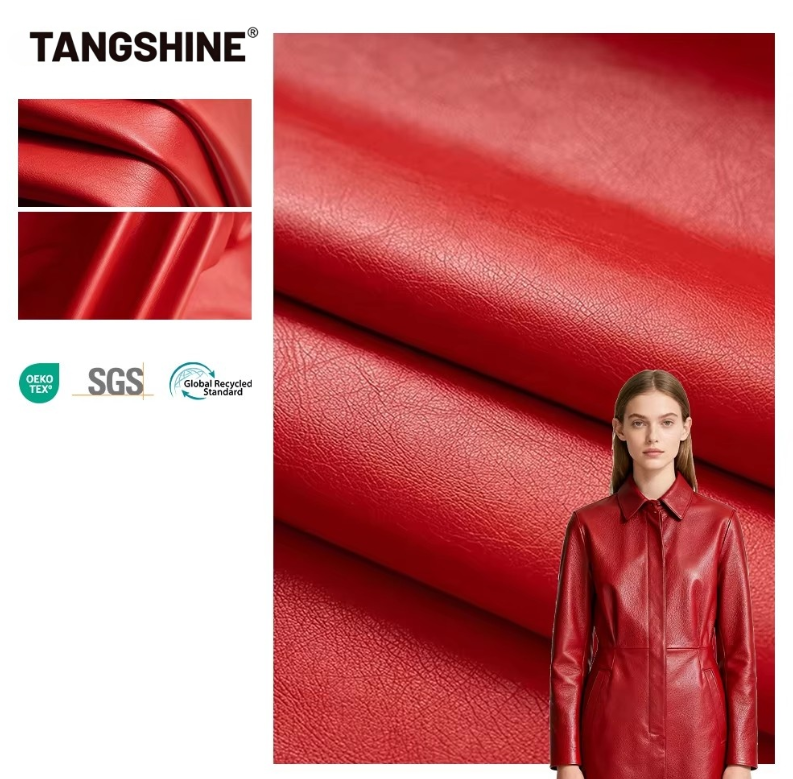
Understanding the Basics of Polyurethane Leather
Polyurethane leather, commonly known as PU leather, is a synthetic material made by coating a fabric backing with a polymer layer. The backing is typically knit polyester or cotton, while the coating is polyurethane, a versatile plastic that can be formulated to feel soft, stiff, matte, or glossy. This material was developed in the late 1930s when researchers discovered the synthesis route for polyurethane. The result is a material that mimics the look and feel of leather without using animal hides. It can be embossed with grain patterns, printed in any color, and finished to resemble everything from smooth calfskin to textured exotic leathers.
How PU Leather Compares to Real Leather and PVC
The comparison with genuine leather is unavoidable, and the honest answer is that they are fundamentally different materials. Real leather is a natural fiber structure that develops a patina over time. PU leather is manufactured with consistent properties from roll to roll, which is a significant advantage for large-scale production. Compared to PVC leather, PU is generally softer, more breathable, and less prone to cracking in cold weather. The table below compares these three materials.
| Property | PU Leather | Real Leather | PVC Leather |
|---|---|---|---|
| Breathability | Moderate | High | Low |
| Weight | Light | Moderate to heavy | Moderate |
| Water resistance | Good | Variable | Excellent |
| Cold weather flexibility | Good | Good | Poor |
| Consistency across batch | Excellent | Variable | Excellent |
| Relative cost | Low to medium | High | Low |
This comparison shows that PU leather occupies a practical middle ground for many fashion applications.
The Environmental Case Against Polyurethane Leather
Here is where the sustainability question gets complicated. Polyurethane is derived from fossil fuels, contributing to greenhouse gas emissions and resource depletion. As a plastic, it does not biodegrade easily and can persist in landfills for a very long time. The manufacturing process involves isocyanates, a group of chemicals that are hazardous to workers and can cause asthma, skin irritation, and in serious cases, liver and kidney dysfunction. While these chemicals become non-toxic once cured into the final material, the risk returns if the material is heated or burned, meaning improper disposal could release toxic substances into the air. Additionally, PU leather is not commonly recycled, which adds to the end-of-life challenge.
Life Cycle Assessments and Comparative Impacts
Research comparing the environmental impact of different leather materials provides useful context. Life cycle assessment studies have compared bovine leather, PU leather, and mycelium leather. The results showed that bovine leather has the highest environmental impact, mainly due to carbon footprint, toxicity potential, and water use. PU leather was found to have a significant environmental burden due to its reliance on non-renewable fossil-based materials and an energy-intensive production process. Mycelium leather emerged as the most sustainable alternative in that study, with the lowest impact scores across all categories. This does not mean PU leather is the worst option, but it does mean that claims about its sustainability need to be examined carefully.
Innovations Pushing Toward More Sustainable Production
The industry is not standing still. Waterborne polyurethane systems have emerged as a more environmentally preferable alternative to traditional solvent-based PU. By using water as the dispersing medium, waterborne PU offers advantages such as non-toxicity, low volatile organic compound emissions, and improved environmental compatibility. Research has demonstrated that waterborne polyurethane microfiber leather can achieve excellent hand feel and light color fastness while being more environmentally friendly. Additionally, recycling technologies are being developed. Studies have explored biological and physicochemical recycling approaches for PU-coated fabrics, enabling the recovery and reintegration of waste into new production cycles. The ZDHC Foundation, a multi-stakeholder organization with many signatories, has also developed guidelines and platforms to help the industry implement safer chemical management practices.
Where PU Leather Performs Best and Where It Struggles
PU leather is a strong choice for fashion items that are worn regularly and replaced within a few seasons. Jackets, bags, belts, shoes, and accessories all suit the material well. It performs less well in applications that demand extreme durability over many years, such as heavy-duty workwear or long-term furniture upholstery. It can also struggle in very hot environments where some formulations become sticky, or in very cold conditions where lower-grade products may stiffen. Understanding these limits helps designers and buyers choose the right material for the right application rather than assuming PU is a universal replacement for leather.
How Manufacturing Quality Determines Sustainability Outcomes
The difference between PU leather that peels in six months and one that lasts for years comes down to manufacturing quality. The adhesion between coating and backing, the thickness and formulation of the top layer, and the consistency of the embossing all affect how the material performs. Tangshine has been producing PU leather materials for the fashion and accessories markets, with a focus on formulations that meet international standards including Oeko-Tex 100 and REACH compliance. The production process controls coating weight and adhesion, which directly affect how the material holds up in real use. For brands that need PU leather that delivers on its promise, that attention to manufacturing detail at the source is what makes the difference between a product that lasts and one that ends up in a landfill prematurely.
Table of Contents
- Understanding the Basics of Polyurethane Leather
- How PU Leather Compares to Real Leather and PVC
- The Environmental Case Against Polyurethane Leather
- Life Cycle Assessments and Comparative Impacts
- Innovations Pushing Toward More Sustainable Production
- Where PU Leather Performs Best and Where It Struggles
- How Manufacturing Quality Determines Sustainability Outcomes
